Wildebeest Great Migration: The Greatest Wildlife Journey on EarthSurvival Challenges During the Wildebeest Great Migration
The Wildebeest Great Migration is one of the greatest examples of survival in the natural world. Although millions of animals successfully complete this incredible journey every year, the migration is filled with dangers and challenges that test the strength, endurance, and instincts of every animal involved.
The journey across the Serengeti-Mara ecosystem is not simply a search for food; it is a constant struggle against nature’s obstacles. From dangerous rivers and predators to harsh weather conditions and exhaustion, migrating animals must overcome numerous challenges to complete their ancient journey.
A Wildebeest Great Migration safari allows travelers to witness these powerful survival moments and understand why this natural event has fascinated the world for generations.
Dangerous River Crossings: The Greatest Test of Survival
One of the biggest challenges during the Wildebeest Great Migration is crossing major rivers that interrupt the migration route.
The most famous crossings occur at:
- The Grumeti River in western Serengeti.
- The Mara River between northern Serengeti and Masai Mara.
These rivers provide essential water sources but also create some of the most dangerous moments of the migration.
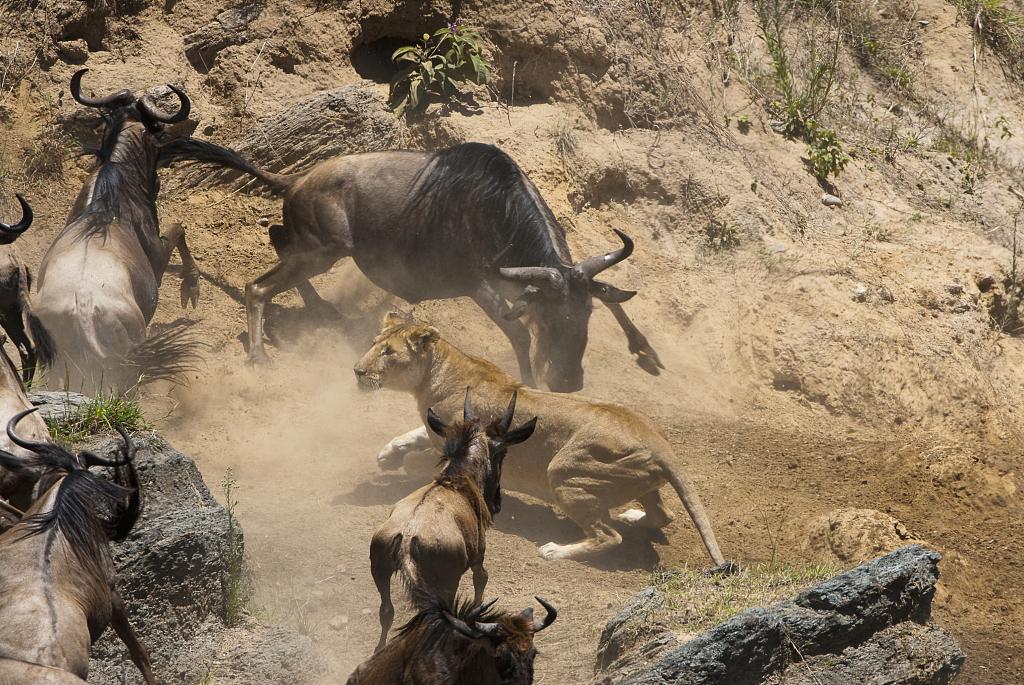
When thousands of wildebeests gather near a riverbank, they face a difficult decision. They must overcome fear and instinctively enter the water while facing strong currents, deep channels, and waiting predators.
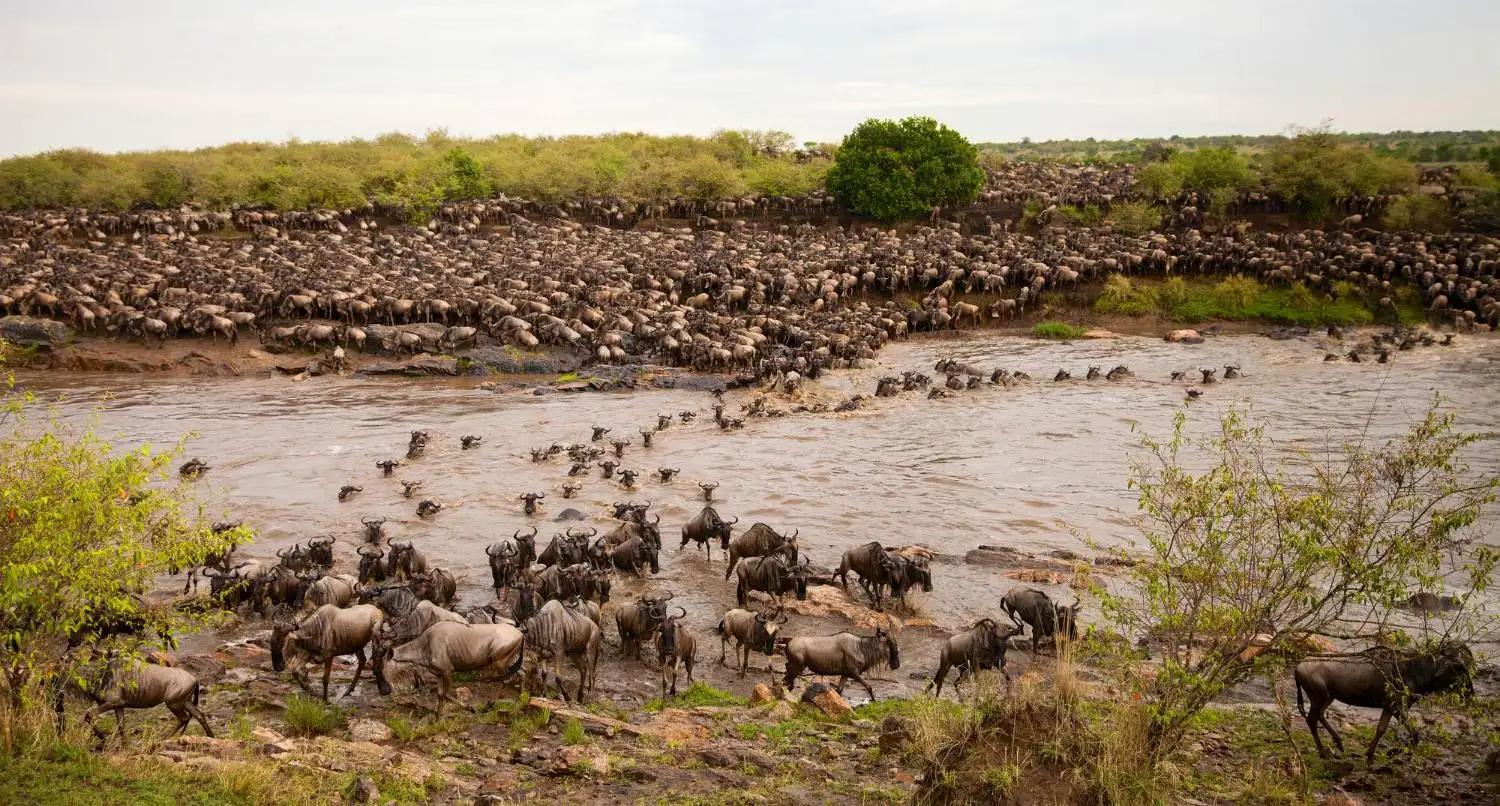
During these crossings, animals must deal with:
Strong Water Currents
Rivers can become powerful barriers, especially after seasonal rains. Strong currents can separate animals from their herds and make it difficult to reach the opposite riverbank.
Steep Riverbanks
Many animals struggle when entering or leaving rivers because of muddy and steep banks.
A successful crossing requires strength, determination, and cooperation within the herd.
Nile Crocodiles
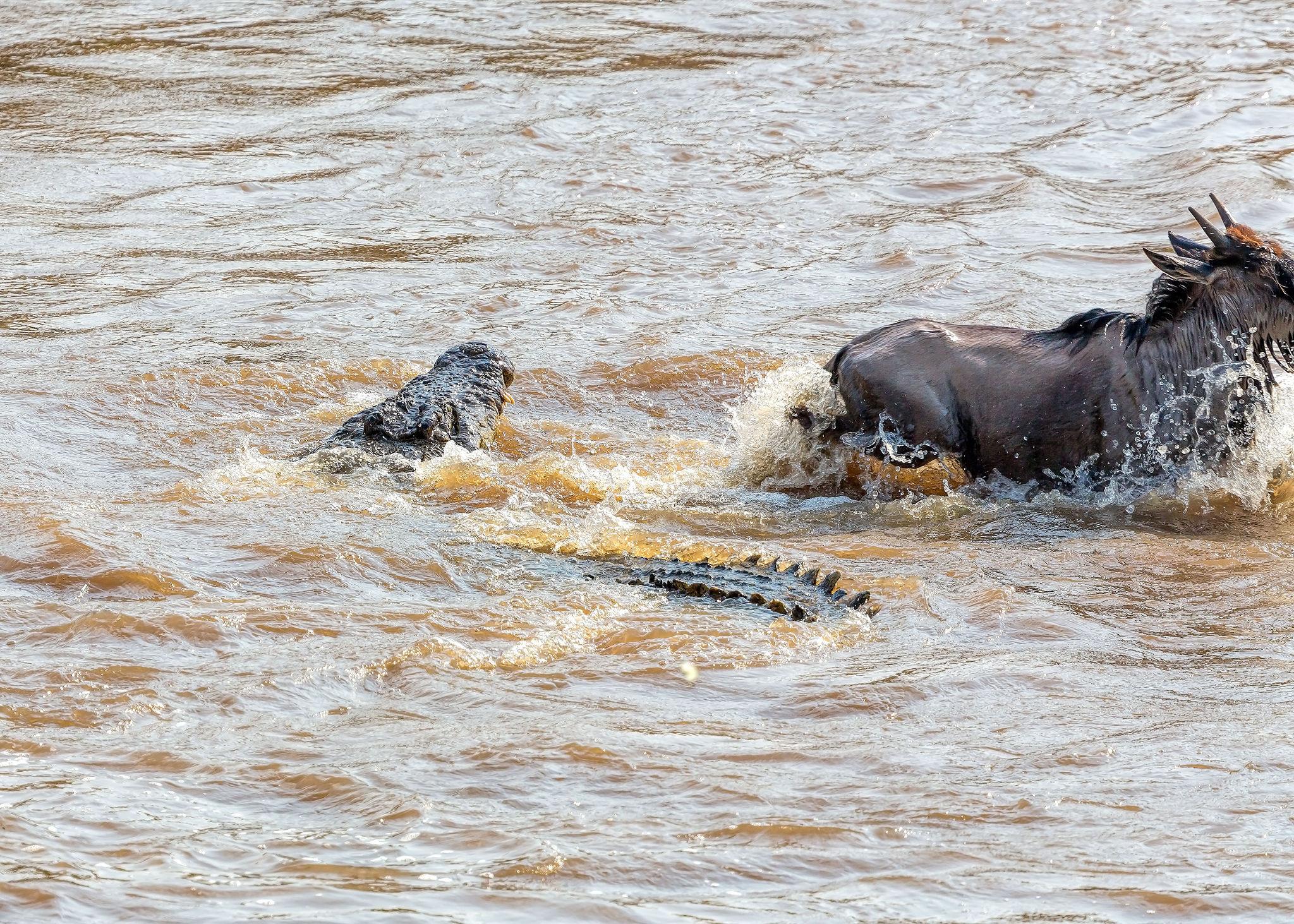
Large Nile crocodiles are among the greatest dangers during river crossings. These ancient predators wait beneath the water, taking advantage of vulnerable animals entering the river.
The dramatic relationship between migrating wildebeests and crocodiles represents one of the most famous scenes of the Wildebeest Great Migration.
Long-Distance Travel and Physical Exhaustion
The Wildebeest Great Migration requires animals to travel hundreds of kilometers across Tanzania and Kenya.
This incredible journey demands enormous physical effort.
Migrating animals must:
- Walk long distances every day.
- Search constantly for food and water.
- Cross difficult landscapes.
- Protect young calves.
- Maintain enough energy to continue moving.
For pregnant females and young calves, the journey can be especially challenging.
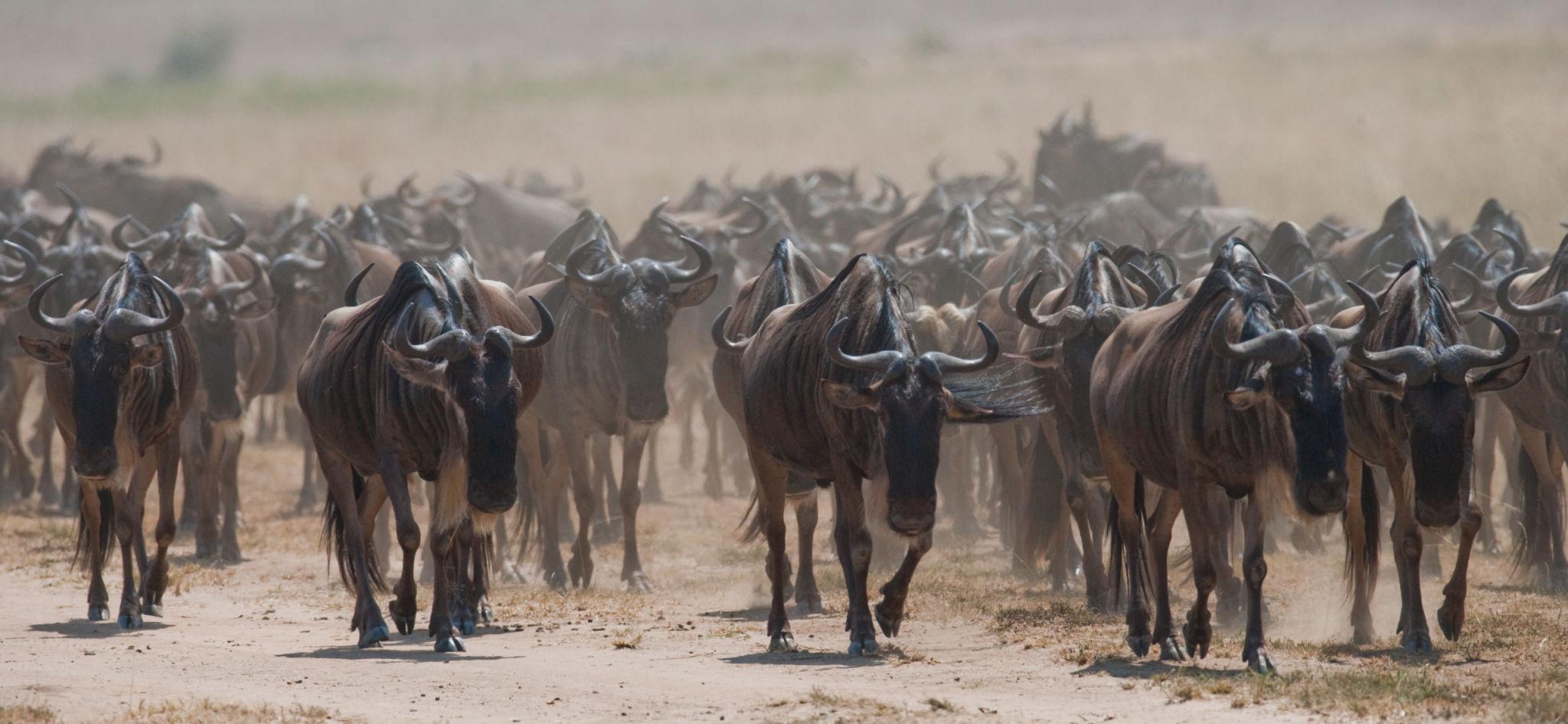
The ability of wildebeests to complete this journey demonstrates their incredible adaptation to the African environment.
Harsh Weather and Environmental Conditions
The Serengeti-Mara ecosystem experiences changing weather conditions throughout the year.
Migrating animals must adapt to:
Heavy Rainfall
Seasonal rains create muddy conditions that make movement more difficult but also provide fresh grass.
Dry Seasons
During dry periods, animals must travel farther to find water and grazing areas.
Extreme Temperatures
The African sun can create challenging conditions, especially during long-distance movements.
Despite these challenges, the migration continues because survival depends on reaching areas with better resources.
Protecting Newborn Calves
The calving season is one of the most beautiful stages of the Wildebeest Great Migration, but it is also one of the most dangerous.
Thousands of wildebeest calves are born in the southern Serengeti between January and March.
Newborn calves face many challenges:
- They must stand shortly after birth.
- They must follow their mothers immediately.
- They must avoid predators.
- They must keep pace with moving herds.
The synchronized birth period increases survival because predators cannot capture every calf when thousands are born at the same time.
However, only the strongest and most adaptable survive.
Competition for Food and Water
The migration involves millions of grazing animals competing for the same natural resources.
As herds move through different landscapes, they must find enough:
- Fresh grass.
- Drinking water.
- Safe resting areas.
The constant movement helps prevent overuse of resources and allows the ecosystem to recover naturally.
Predator Encounters During the Wildebeest Great Migration
The movement of millions of prey animals creates one of Africa’s greatest predator gatherings.
The Wildebeest Great Migration attracts some of the world’s most famous predators because the enormous herds provide incredible hunting opportunities.
For wildlife enthusiasts, predator encounters are among the most exciting moments of a migration safari.
The migration creates a dramatic relationship between survival and hunting, where predators depend on migrating animals while also helping maintain the balance of the ecosystem.
Lions: Following the Great Herds
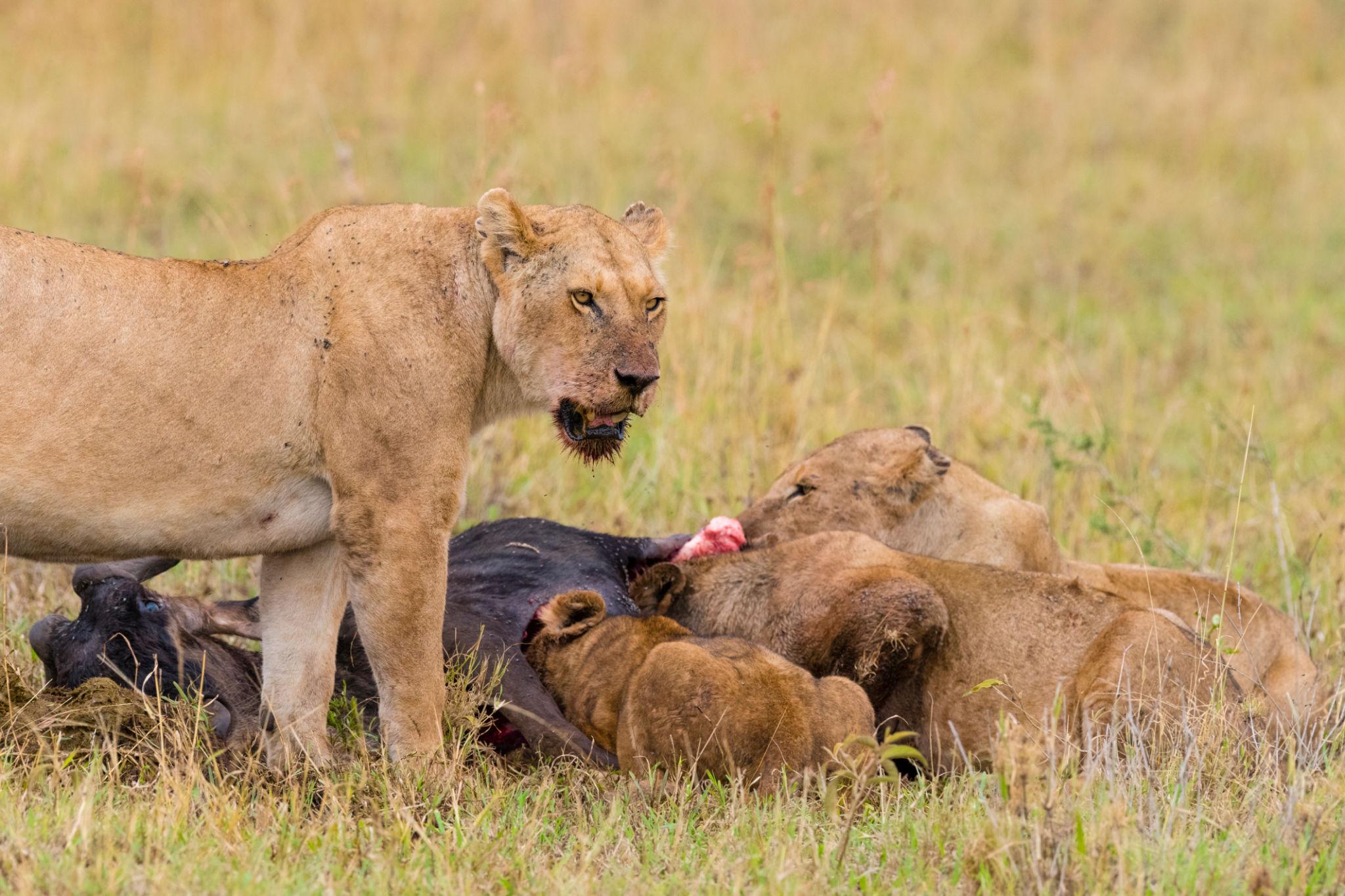
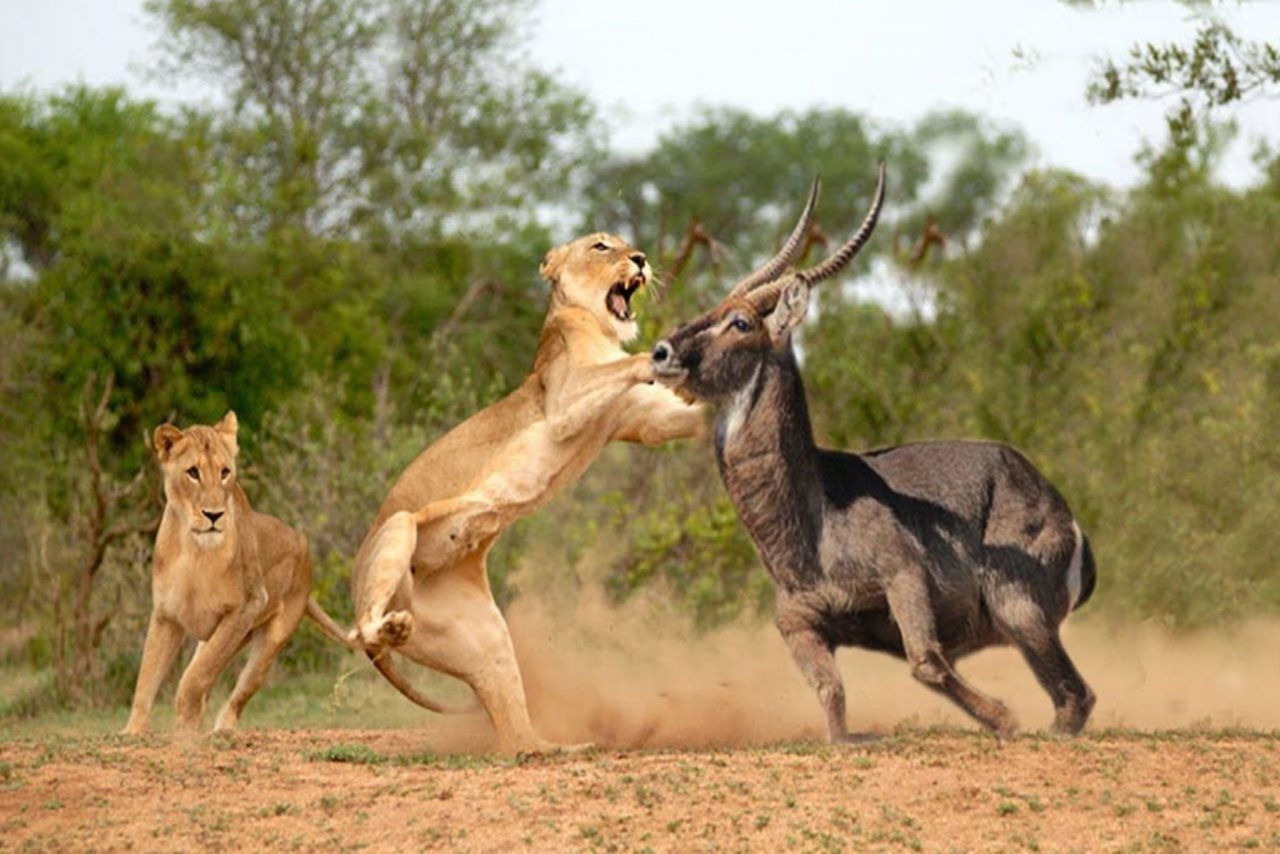
Lions are among the most iconic predators associated with the Wildebeest Great Migration.
The Serengeti and Masai Mara are famous for their large lion populations, and migration season creates excellent opportunities to observe these powerful cats.
Lions often follow migrating herds because:
- Wildebeests provide abundant food.
- Large groups create hunting opportunities.
- Weak or separated animals become easier targets.
During a migration safari, travelers may witness lions:
- Resting near migration routes.
- Hunting on open plains.
- Moving in family prides.
- Teaching cubs survival skills.
The presence of lions adds another layer of excitement to the migration experience.
Cheetahs: Speed and Strategy on the Open Plains
Cheetahs are perfectly adapted to the open landscapes of the Serengeti and Masai Mara.
Unlike lions that rely on strength and teamwork, cheetahs depend on:
- Speed.
- Agility.
- Precision.
- Short explosive attacks.
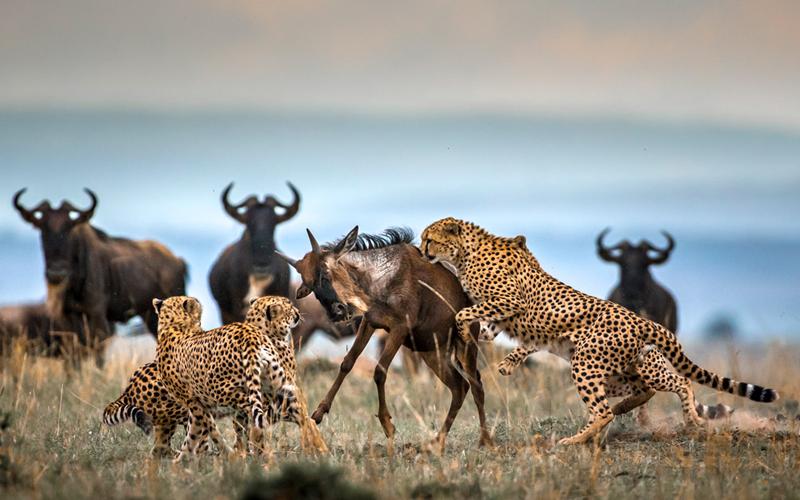
During the Wildebeest Great Migration, cheetahs often target:
- Young wildebeests.
- Gazelles.
- Smaller antelope.
The open grasslands provide excellent visibility, allowing cheetahs to spot potential prey from a distance.
A successful cheetah hunt is one of the most thrilling wildlife moments travelers can experience.
Leopards: The Hidden Hunters
Leopards are among Africa’s most secretive predators.
Unlike lions and cheetahs, leopards prefer a more solitary hunting style.
They are commonly found near:
- Riverine forests.
- Acacia woodlands.
- Rocky areas.
Their ability to remain hidden makes leopard sightings especially rewarding.
During the Wildebeest Great Migration, leopards benefit from increased prey movement and may hunt animals traveling through their territories.
Hyenas: Skilled Hunters and Survivors
Hyenas play an important role during the migration.
Although often misunderstood, hyenas are highly intelligent predators and successful hunters.
They follow migrating herds because the movement creates opportunities for:
- Hunting weakened animals.
- Competing with other predators.
- Scavenging remains.
Hyenas contribute to the ecosystem by helping recycle nutrients and maintain natural balance.
Importance of the Wildebeest Great Migration to the Ecosystem
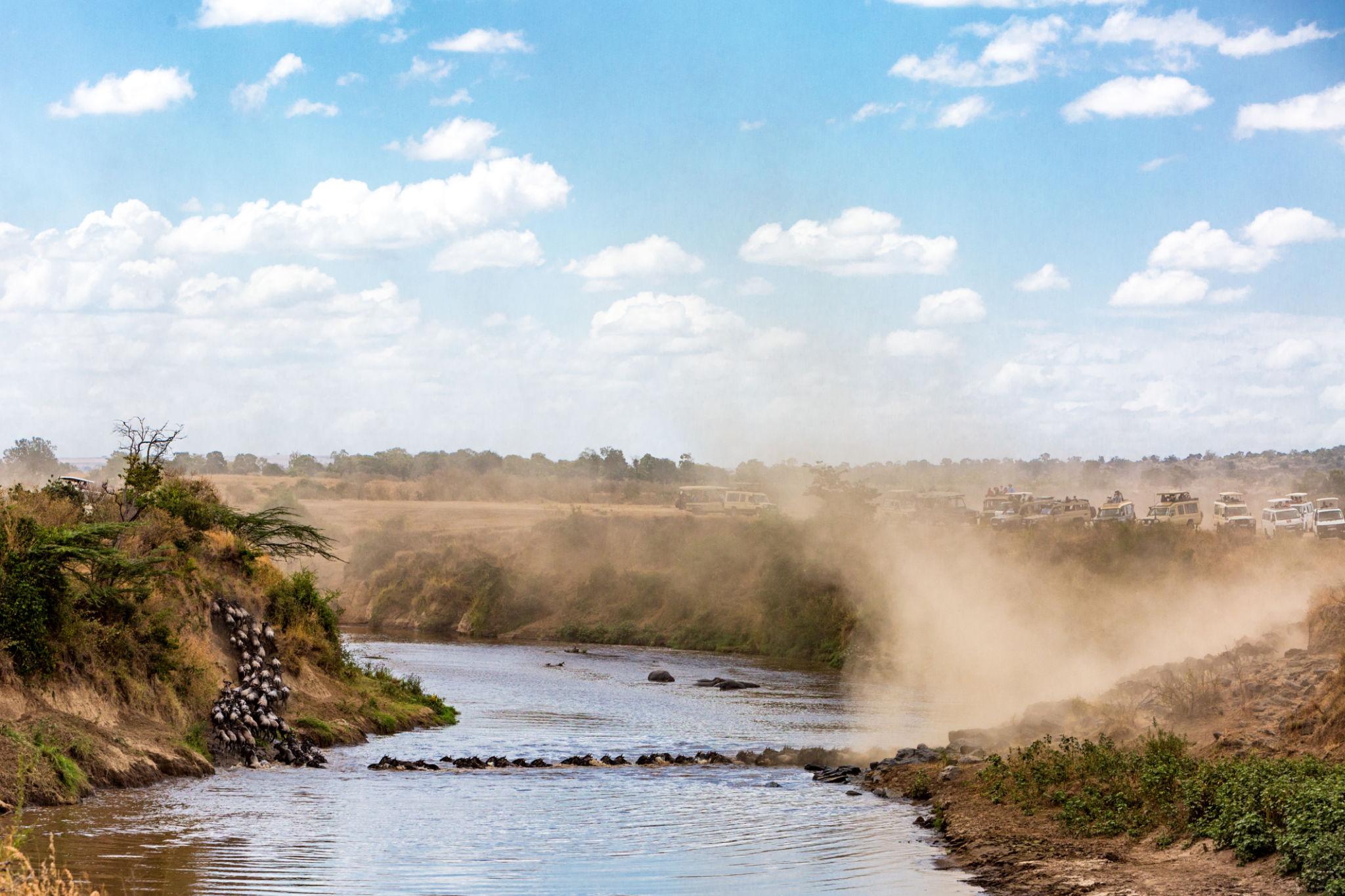
The Wildebeest Great Migration is not only a spectacular wildlife event; it is also essential to the health of the Serengeti-Mara ecosystem.
The movement of millions of animals influences nearly every part of the environment.
Maintaining Healthy Grasslands
Grazing by millions of wildebeests helps maintain the balance of grassland ecosystems.
As animals feed:
- They prevent excessive grass growth.
- They encourage new vegetation.
- They influence plant diversity.
The movement of herds creates healthier landscapes for many other species.
Nutrient Recycling Across the Ecosystem
Migrating animals play an important role in returning nutrients to the environment.
Through:
- Grazing.
- Natural waste.
- Movement across landscapes.
The animals help distribute nutrients throughout the Serengeti and Masai Mara.
This process supports plant growth and benefits many other wildlife species.
Supporting Predator Populations
The Wildebeest Great Migration provides essential food resources for Africa’s predators.
Without the migration, many predator populations would struggle to survive.
The movement supports:
- Lions.
- Cheetahs.
- Leopards.
- Hyenas.
- Crocodiles.
This creates a natural balance between prey and predator populations.
Supporting Biodiversity
The migration benefits thousands of species living within the Serengeti–Mara ecosystem.
The presence of large grazing herds supports:
- Birds.
- Insects.
- Plants.
- Smaller mammals.
The migration is a foundation of one of the richest wildlife ecosystems on Earth.
Conservation Importance of the Wildebeest Great Migration
Protecting the Wildebeest Great Migration is essential for preserving one of the world’s greatest natural wonders.
Although the migration continues successfully today, it depends on conservation efforts that protect wildlife, habitats, and migration corridors.
Protecting Migration Corridors
One of the biggest conservation priorities is protecting the traditional routes used by migrating animals.
These corridors allow wildlife to move freely between:
- Serengeti National Park.
- Masai Mara National Reserve.
- Surrounding conservation areas.
Without open migration routes, animals would struggle to complete their ancient journey.
Protecting National Parks and Wildlife Areas
Protected areas such as:
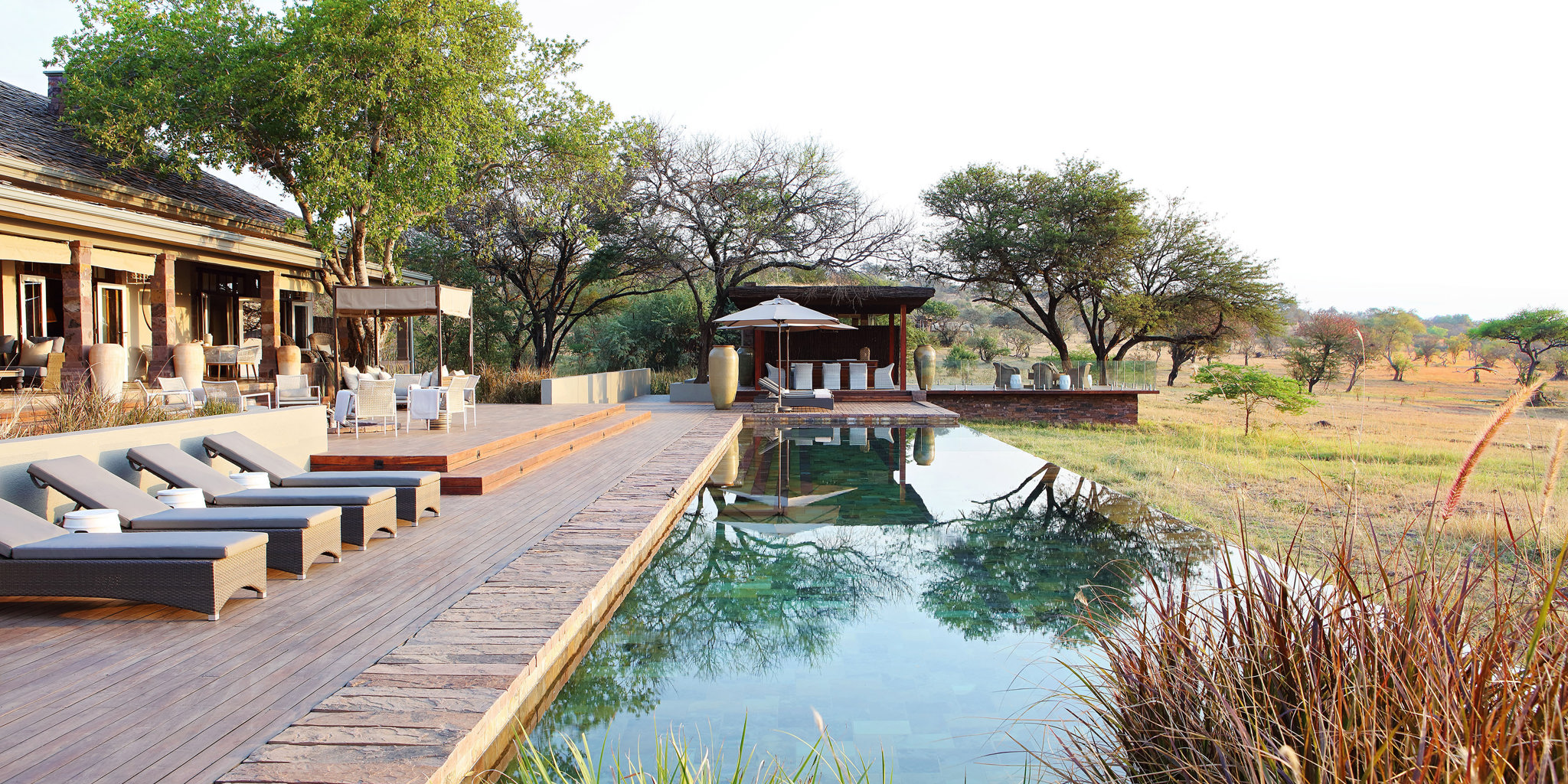
provide safe habitats where wildlife can survive.
Conservation management helps protect animals from threats and maintain healthy ecosystems.
Fighting Poaching and Illegal Activities
Conservation organizations work to reduce threats including:
- Wildlife poaching.
- Illegal hunting.
- Habitat destruction.
Protecting migrating animals ensures future generations can continue experiencing this incredible natural event.
Sustainable Tourism and Conservation
Responsible tourism plays an important role in protecting the Wildebeest Great Migration.
Safari tourism supports conservation through:
- Park fees.
- Employment opportunities.
- Community projects.
- Wildlife protection programs.
When travelers visit responsibly, they contribute directly to preserving Africa’s wildlife heritage.
What Causes the Wildebeest Great Migration?
The Wildebeest Great Migration is mainly caused by the search for three essential elements needed for survival:
- Fresh food.
- Reliable water sources.
- Suitable conditions for breeding.
Unlike human journeys that follow planned routes, wildebeests move according to the changing environment. Their migration is controlled by nature’s patterns, especially rainfall and vegetation growth.
The movement of more than one million animals requires a delicate balance between weather, landscapes, and available resources.
Seasonal Rainfall Patterns: The Main Driver of Migration
Rainfall is the most important factor influencing the Wildebeest Great Migration.
The Serengeti and Masai Mara landscapes experience seasonal rains that transform dry plains into green, nutrient-rich grasslands. When rainfall arrives in a particular area, fresh vegetation grows, attracting huge numbers of grazing animals.
Wildebeests have an extraordinary ability to sense environmental changes. They instinctively move toward areas where rain has created better feeding opportunities.
For example:
Southern Serengeti Rains
Between January and March, short rains create ideal conditions in the southern Serengeti and Ndutu Plains.
This period provides:
- Fresh grass for pregnant females.
- Safe breeding areas.
- Nutrient-rich food for newborn calves.
This is why the southern Serengeti becomes the center of the migration during calving season.
Northern Migration Movement
Later in the year, as food resources decrease, the herds begin moving north toward central Serengeti, western Serengeti, and eventually Kenya’s Masai Mara.
The entire migration cycle follows the movement of rainfall and vegetation.
Availability of Fresh Grass
The search for fresh grass is one of the strongest reasons behind the Wildebeest Great Migration.
Wildebeests are grazing animals that require enormous amounts of vegetation every day. When more than one million animals gather together, available grass can quickly become depleted.
Migration allows the herds to:
- Access new feeding areas.
- Maintain healthy body conditions.
- Support reproduction.
- Survive seasonal changes.
The movement of wildebeests also benefits the ecosystem because grazing helps maintain the balance of grasslands.
As animals feed, they encourage new plant growth and recycle nutrients back into the soil.
Water Sources and the Importance of Rivers
Water plays a critical role in the Wildebeest Great Migration.
During long journeys across the Serengeti and Masai Mara, animals must constantly search for rivers, streams, and seasonal water sources.
Important water points along the migration include:
Grumeti River
Located in western Serengeti, the Grumeti River creates one of the migration’s first major challenges.
Mara River
The Mara River creates the most famous migration event, where thousands of animals attempt dramatic crossings.
These rivers provide essential water but also represent dangerous obstacles because of:
- Strong currents.
- Deep channels.
- Large Nile crocodiles.
- Difficult riverbanks.
Ancient Natural Instincts
The Wildebeest Great Migration has continued for thousands of years because these animals possess powerful natural instincts.
Migration knowledge is passed through generations.
Young wildebeests learn from:
- Older herd members.
- Seasonal movements.
- Environmental signals.
- Natural landscapes.
Even without maps or human guidance, wildebeests can navigate across enormous distances using instincts developed over thousands of years.
This ability represents one of the most remarkable examples of animal adaptation in the natural world.
Why Wildebeests Migrate
The main reason wildebeests migrate is survival.
The Wildebeest Great Migration allows these animals to continuously search for better resources while avoiding environmental challenges that could threaten the survival of the herd.
Migration provides several important advantages.
Finding Better Feeding Areas
A single wildebeest requires large amounts of grass to survive, and a herd containing over one million animals consumes enormous quantities of vegetation.
Without migration, available food would quickly become insufficient.
Moving through the Serengeti–Mara ecosystem allows wildebeests to:
- Follow fresh grass.
- Maintain healthy populations.
- Support pregnant females.
- Raise young calves.
The endless movement ensures that the herd remains connected to the resources needed for survival.
Protecting Newborn Calves
The migration cycle is closely connected with reproduction.
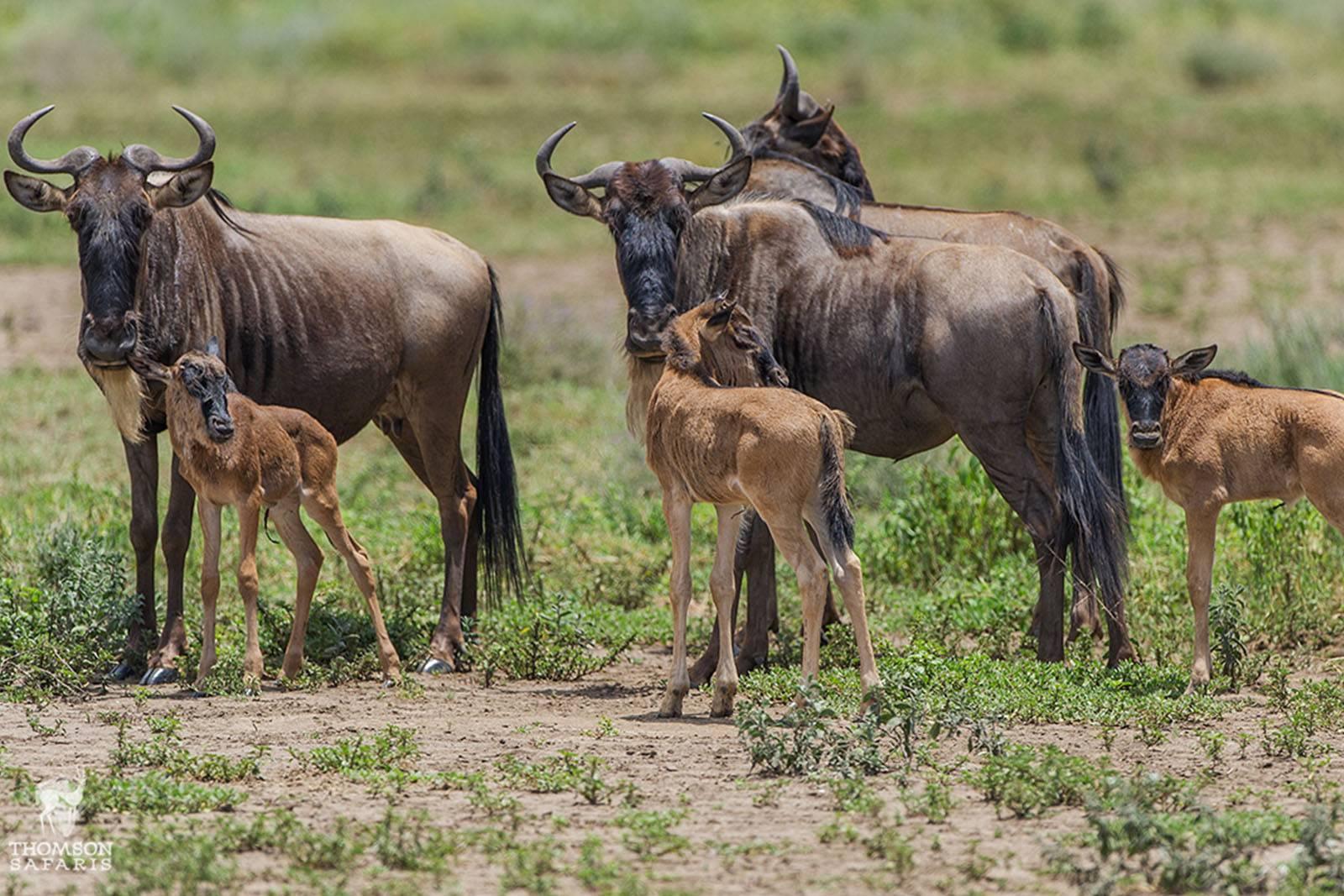
During the calving season, wildebeests move to the nutrient-rich southern Serengeti plains where mothers give birth when food availability is highest.
This timing is extremely important because newborn calves require:
- High-quality grass.
- Protection from predators.
- Strong mothers with enough energy.
The synchronized birth period increases survival because predators cannot capture every newborn when thousands are born together.
Escaping Environmental Pressure
The Serengeti environment changes throughout the year.
Migration helps wildebeests avoid:
- Drought conditions.
- Reduced food availability.
- Water shortages.
- Increased competition.
Their movement allows the population to adapt naturally to changing conditions.
Maintaining Herd Strength
Large herds provide protection against predators.
When thousands of wildebeests move together:
- Predators find it harder to isolate individuals.
- Adults can protect younger animals.
- The group benefits from collective awareness.
The enormous size of the herd is one of the reasons the species has survived for thousands of years.
Wildebeest Great Migration Route Map: Serengeti to Masai Mara Journey
The Wildebeest Great Migration follows a circular route covering hundreds of kilometers between Tanzania and Kenya.
The migration route passes through several major wildlife regions, each offering unique experiences.
Southern Serengeti and Ndutu Plains: Birthplace of New Life
The journey begins in southern Serengeti, especially the famous Ndutu Plains.
Between January and March, this region becomes the center of the calving season.
The landscape transforms into a wildlife nursery where thousands of calves are born.
Visitors can experience:
- Newborn wildebeests taking their first steps.
- Large grazing herds.
- Active predators.
- Green landscapes after rainfall.
This stage represents the beginning of the annual migration cycle.
Central Serengeti: The Heart of the Journey
After calving season, herds begin moving north through central Serengeti.
This region is one of the best places to experience the combination of migrating wildlife and permanent resident animals.
Central Serengeti offers opportunities to see:
- Lions.
- Leopards.
- Cheetahs.
- Elephants.
- Giraffes.
- Buffaloes.
The Seronera Valley is particularly famous because permanent water sources attract wildlife throughout the year.
Western Serengeti and Grumeti River
Around May and June, the herds reach western Serengeti.
Here they face one of their first major obstacles: the Grumeti River.
This stage is famous for:
- Large Nile crocodiles.
- Dramatic river crossings.
- Massive herd gatherings.
- Predator activity.
The Grumeti crossing provides one of the most authentic migration experiences because it is less crowded than the famous Mara River crossings.
Northern Serengeti and Masai Mara
Between July and October, migrating animals reach northern Serengeti before entering Kenya’s Masai Mara.
This is the stage known worldwide for the dramatic Mara River crossings.
Animals face:
- Powerful currents.
- Waiting crocodiles.
- Steep riverbanks.
- Predator threats.
After spending time in Kenya, the herds eventually begin their return journey south.
Millions of Wildebeests, Zebras and Gazelles
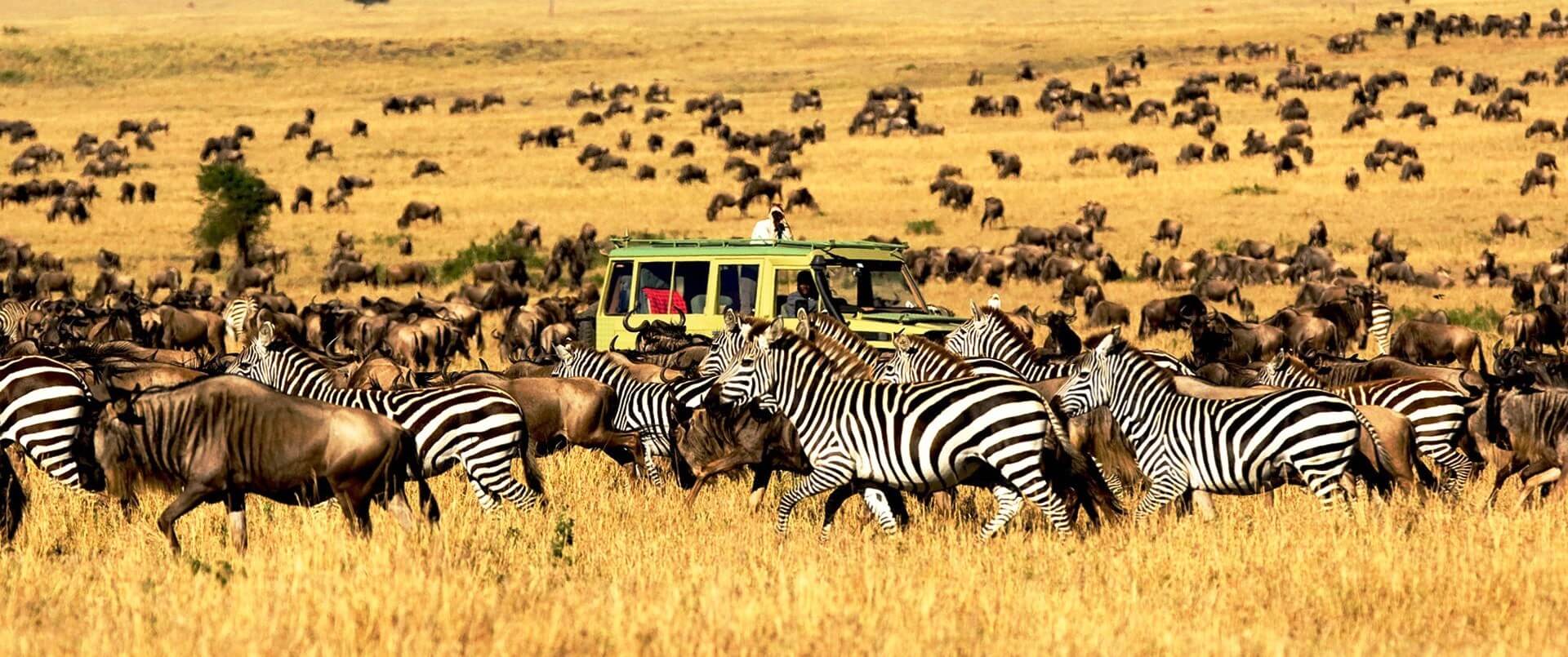
The enormous scale of the Wildebeest Great Migration is what makes it one of the greatest wildlife events on Earth.
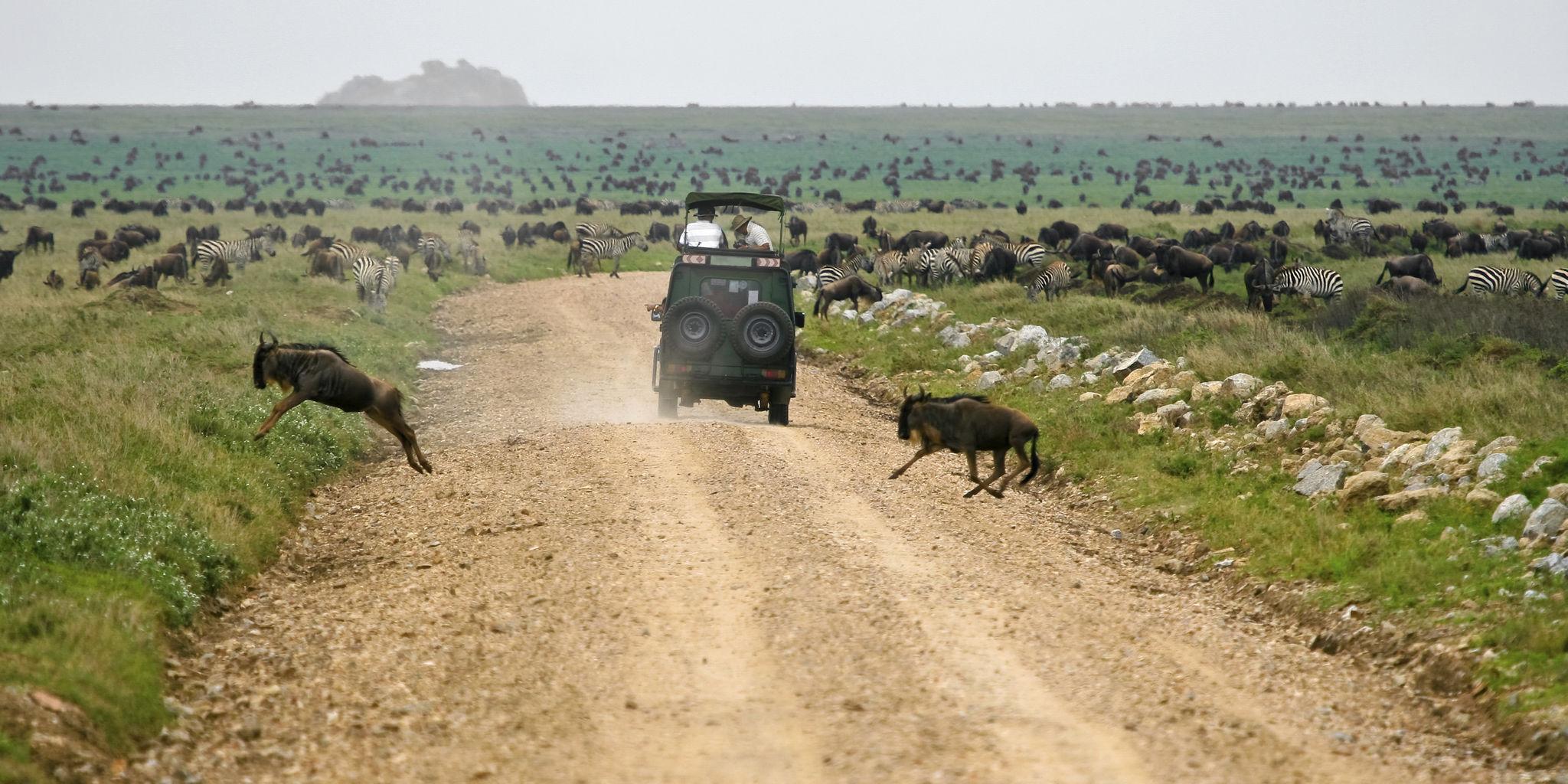
The migration involves millions of grazing animals moving together through East Africa.
Around 1.5 Million Wildebeests
Wildebeests are the main participants in the migration.
Their incredible numbers create some of the most spectacular wildlife scenes imaginable.
A traveler witnessing a herd stretching across the Serengeti horizon can see:
- Thousands of animals moving together.
- Dust rising from the plains.
- Herds crossing open landscapes.
- Massive gatherings near rivers.
The sheer size of the wildebeest population is what makes this migration unique.
Hundreds of Thousands of Zebras
Zebras are important companions during the Wildebeest Great Migration.
They travel alongside wildebeests because both species benefit from different feeding habits.
Zebras usually eat taller grasses first, allowing wildebeests to access shorter, more nutritious grasses afterward.
This natural partnership helps both species survive during their long journey.
Large Numbers of Gazelles
Gazelles also participate in the migration, adding even more diversity to the movement.
Species such as Thomson’s gazelles benefit from the changing landscapes and follow the availability of fresh grazing areas.
Together, wildebeests, zebras, and gazelles create one of the largest wildlife gatherings on Earth.
Experience The Wildebeest Great Migration with Boots in the Jungle Safaris
The Wildebeest Great Migration is more than a wildlife journey; it is one of the greatest stories of survival, adaptation, and natural beauty on Earth.
From the birth of thousands of calves in southern Serengeti to dramatic river crossings, predator encounters, and endless herds moving across the plains, every moment reveals the incredible power of nature.
At Boots in the Jungle Safaris, we specialize in creating unforgettable migration safari experiences across Tanzania and Kenya. Our expert team designs personalized journeys based on the best migration seasons, wildlife locations, accommodation preferences, and your travel dreams.
Whether you want to witness the famous Mara River crossings, explore the Serengeti calving grounds, enjoy a luxury wildlife adventure, or combine the migration with other East African experiences, we create journeys that bring you closer to Africa’s greatest natural spectacle.
Our Wildebeest Great Migration Safari experiences include:
- Expert safari guides.
- Carefully selected lodges and camps.
- Private safari options.
- Seasonal migration planning.
- Photography-focused adventures.
- Luxury and family-friendly itineraries.
Discover the incredible journey that has fascinated the world for generations.
The Wildebeest Great Migration is one of the most extraordinary natural events on Earth and the largest terrestrial wildlife movement ever witnessed. Every year, more than 1.5 million wildebeests, together with hundreds of thousands of zebras, gazelles, and other grazing animals, travel across the magnificent landscapes of Tanzania and Kenya in search of fresh grass, water, and the best conditions for survival.
This incredible journey takes place within the world-famous Serengeti-Mara ecosystem, a vast wilderness area connecting Tanzania’s Serengeti National Park with Kenya’s Masai Mara National Reserve. This ecosystem represents one of the last remaining places on Earth where wildlife can move freely across such a large natural landscape.
The Wildebeest Great Migration is not a simple movement from one destination to another. It is an ancient survival journey controlled by nature itself. The animals follow seasonal rainfall patterns, changing grass availability, and water sources that guide them through hundreds of kilometers of wilderness.
For thousands of years, wildebeests have followed these same migration routes, creating one of the most impressive examples of animal adaptation and survival.
Throughout the year, the migrating herds experience different stages of the journey:
- Birth and renewal during the southern Serengeti calving season.
- Long-distance movement across endless plains.
- Dangerous river crossings filled with crocodiles.
- Predator encounters involving lions, cheetahs, leopards, and hyenas.
- Return journeys following seasonal rainfall.
A Wildebeest Great Migration experience allows travelers to witness the complete circle of life in Africa. From the first moments of newborn calves standing on the plains to the dramatic struggle of animals crossing powerful rivers, every stage reveals the incredible strength and resilience of nature.
At Boots in the Jungle Safaris, we create unforgettable safari experiences that allow travelers to discover the beauty, importance, and drama of the Wildebeest Great Migration through expertly designed Tanzania and Kenya safari journeys.
Whether you want to witness the famous Mara River crossings, explore the Serengeti calving grounds, photograph massive wildlife herds, or enjoy a luxury migration safari, our team helps you experience this natural wonder at the perfect time and location.