
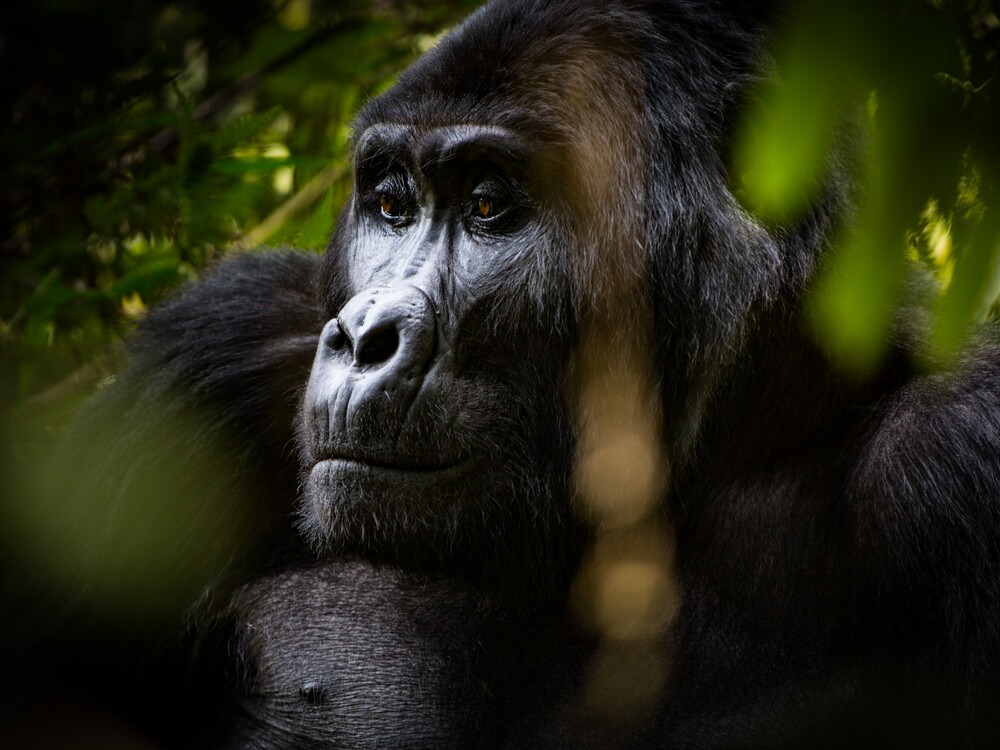
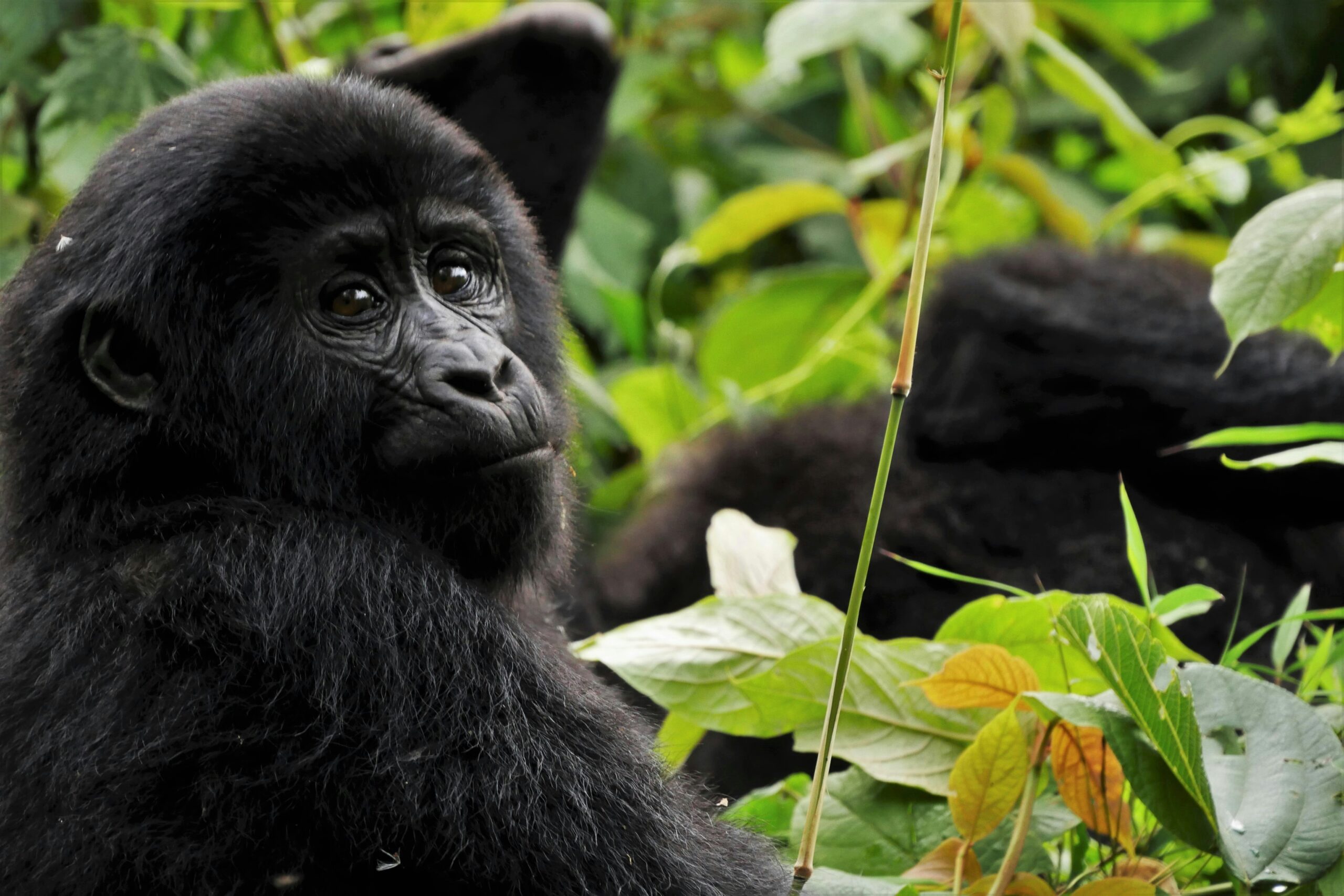
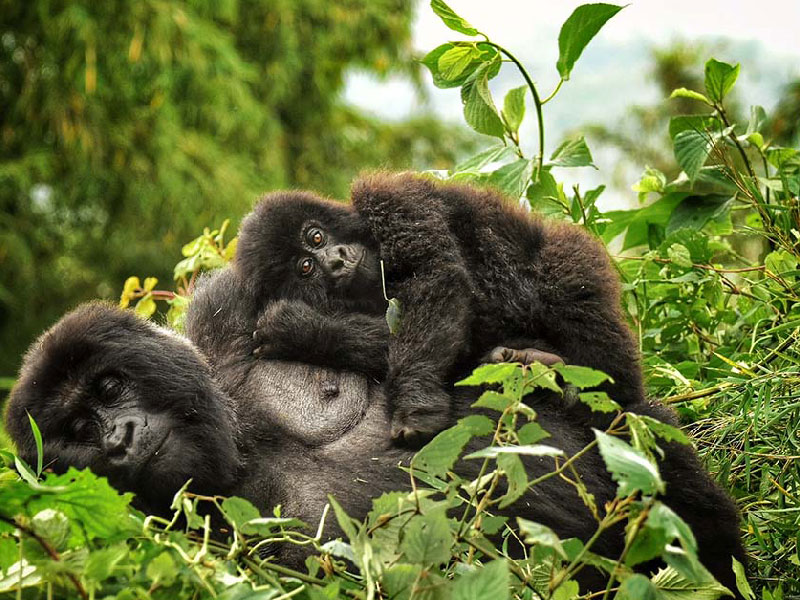
Bwindi Gorilla Trekking is one of the most extraordinary wildlife experiences available anywhere in Africa, taking travelers deep into the ancient rainforest of southwestern Uganda to search for habituated mountain gorilla families living freely within Bwindi Impenetrable National Park. Unlike a conventional African safari where most wildlife is observed from a vehicle, gorilla trekking is an active forest experience. Travelers enter the rainforest on foot alongside trained Uganda Wildlife Authority ranger guides and trackers, following trails, animal signs and fresh evidence of gorilla movement through a landscape of steep slopes, tangled vegetation, towering trees, streams and mist-covered ridges. The journey through the forest is an important part of the experience because the gorillas are not confined to a predictable location and every trek unfolds differently.
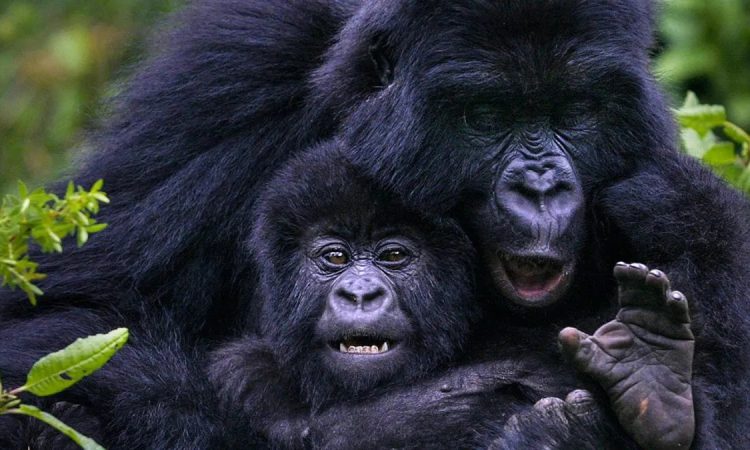
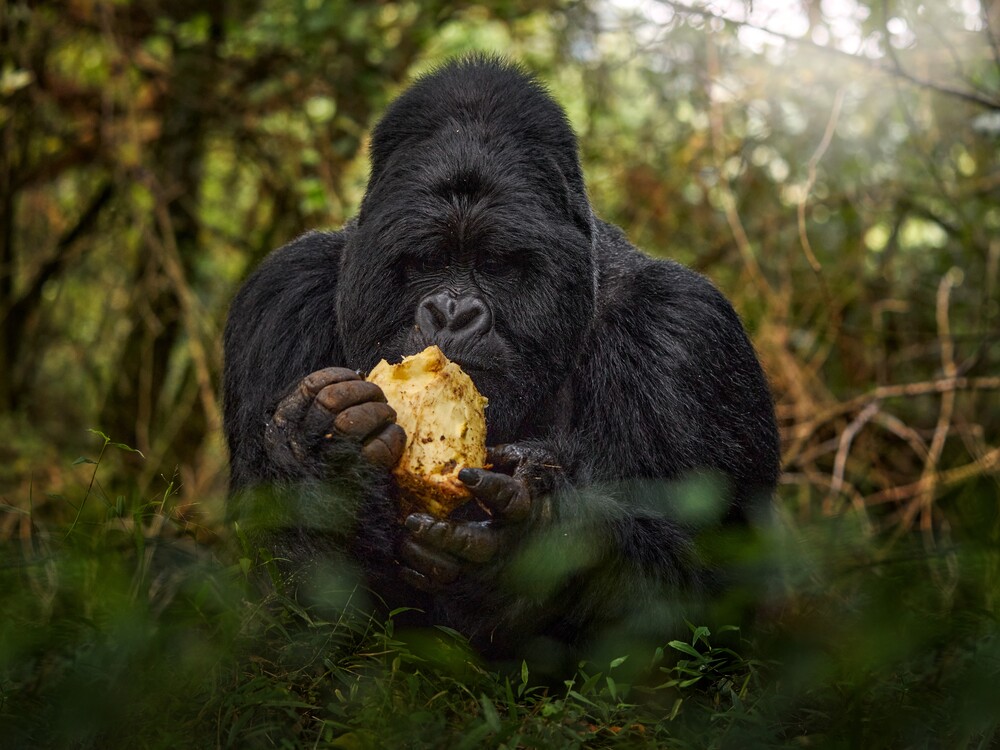
The moment a gorilla family is finally located often becomes one of the defining memories of an entire African journey. Visitors may first hear branches breaking somewhere ahead, see vegetation moving through the forest or catch a glimpse of a dark shape between the leaves before the complete family comes into view. A powerful silverback may be resting only a short distance away while females feed quietly, mothers care for infants and younger gorillas climb trees, wrestle with one another or investigate their surroundings. Because these are wild animals behaving naturally in their own habitat, there is no scripted sequence to the encounter. This authenticity is what makes Bwindi Gorilla Trekking so different from almost every other wildlife experience.
Bwindi Impenetrable National Park is particularly important within global mountain gorilla conservation. The park protects a substantial proportion of the world’s remaining mountain gorilla population and contains several habituated families that can be visited under carefully regulated tourism conditions. It is also much more than a gorilla sanctuary. Bwindi is a biologically rich montane and lowland forest ecosystem containing exceptional plant diversity, hundreds of bird species, numerous mammals, butterflies and other wildlife. Travelers therefore experience an entire rainforest environment rather than simply walking directly toward a single animal species.
Another major advantage of Bwindi Gorilla Trekking in Uganda is the park’s division into the four main trekking sectors of Buhoma, Ruhija, Rushaga and Nkuringo. Each sector operates as a distinct gorilla trekking base with its own briefing area, habituated gorilla families, accommodation options, landscapes and road connections. This gives safari planners greater flexibility when designing itineraries around permit availability, lodge preference, travel route and the physical needs of individual guests. Someone traveling from Queen Elizabeth National Park may naturally fit Buhoma into the journey, while a traveler arriving from Kigali or Kisoro may find Rushaga or Nkuringo more practical.
For travelers planning a broader Uganda safari, Bwindi also connects naturally with several of the country’s most important destinations. A gorilla trek can be followed by chimpanzee tracking in Kibale National Park, game drives and a Kazinga Channel boat safari in Queen Elizabeth National Park, relaxation at Lake Bunyonyi, golden monkey tracking in Mgahinga Gorilla National Park or a longer journey through Lake Mburo and western Uganda. This makes Bwindi one of the strongest anchor destinations around which a complete Uganda wildlife itinerary can be designed.
At Boots in the Jungle Safaris, we approach Bwindi as more than a single trekking morning. The quality of the experience depends on obtaining the right permit, matching the permit to the correct trekking sector, choosing a lodge close to the appropriate briefing point, planning realistic transfer times and allowing enough flexibility before and after the trek. When those elements are carefully coordinated, Bwindi Gorilla Trekking becomes the centerpiece of a seamless Uganda safari rather than an isolated activity surrounded by stressful logistics.
Why Choose Bwindi for Gorilla Trekking in Uganda?
Bwindi is Uganda’s most established and diverse destination for mountain gorilla trekking, and one of its greatest advantages is the sheer range of trekking possibilities available within a single protected area. Instead of operating from only one central trailhead, Bwindi Gorilla Trekking is spread across four sectors—Buhoma, Ruhija, Rushaga and Nkuringo. This geographic diversity provides flexibility when permits become limited in one area and allows safari itineraries to be designed more intelligently around where travelers are coming from and where they are going next.
The park’s mountain gorilla population is one of the strongest reasons travelers choose Bwindi. The wider Bwindi landscape protects a significant proportion of the world’s remaining mountain gorillas, making the national park central to Uganda’s international reputation for primate conservation. Several habituated gorilla families are available for controlled visitor trekking, giving Bwindi greater operational flexibility than a destination dependent on a single family or small number of groups. For travelers, this can improve the chances of securing permits when planning early, although permit availability should never be taken for granted during busy travel periods.
Another major attraction is the diversity between the four trekking sectors. Buhoma is famous for its long history of gorilla tourism, well-developed accommodation base and practical connection with Queen Elizabeth National Park. Ruhija sits within the park’s elevated eastern region and appeals to visitors seeking dramatic forest landscapes and quieter surroundings. Rushaga is particularly important for southern Bwindi itineraries and is associated with both standard gorilla trekking and Uganda’s specialized Gorilla Habituation Experience. Nkuringo is known for spectacular highland scenery and works exceptionally well with itineraries involving Kisoro, Lake Mutanda, Lake Bunyonyi and Kigali.
This diversity means there is no single “best” Bwindi sector for every traveler. A couple on a luxury honeymoon may value a particular lodge and mountain view, while a photographer may prefer an itinerary offering additional nights near the forest. A senior traveler may prioritize short morning transfers and porter support, whereas someone combining gorillas with Queen Elizabeth National Park may benefit from staying in northern Bwindi. Choosing the correct sector is therefore a logistical and experiential decision rather than merely a question of which area has the most famous name.
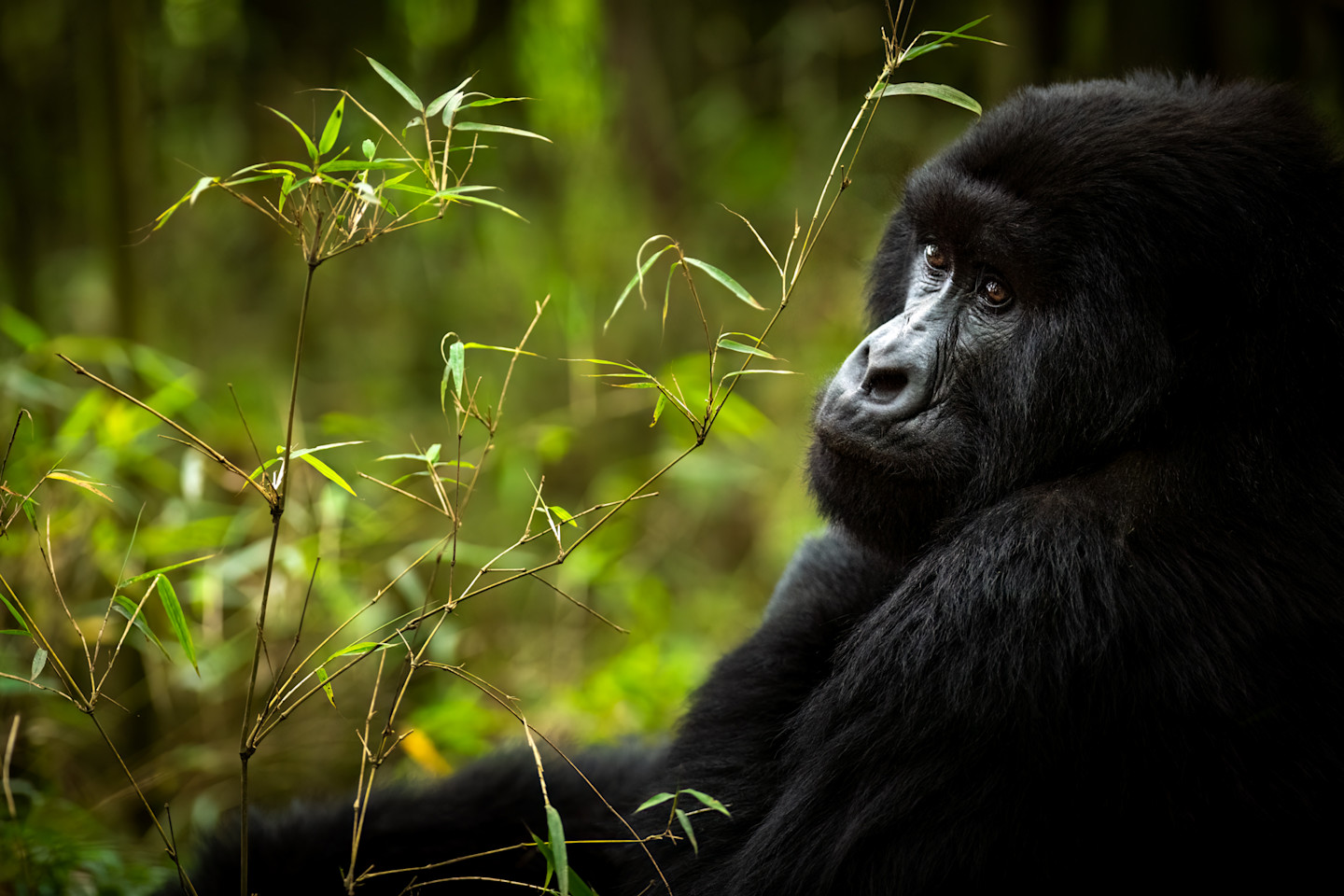
Bwindi also stands apart because gorilla trekking takes place within an exceptionally complex rainforest environment. The park protects steep mountain slopes, valley forests, streams and a mixture of vegetation zones that create one of East Africa’s richest natural ecosystems. The sense of entering an ancient forest is immediate. Mist may drift through the hills in the morning, giant trees rise above dense undergrowth and narrow trails disappear into layers of vegetation. For travelers accustomed to open savannahs, this creates an entirely different style of safari.
Bird enthusiasts also find Bwindi particularly rewarding because the forest forms part of the Albertine Rift biodiversity region and supports numerous sought-after species. Although gorillas remain the main reason most international travelers visit, birdwatching, forest walks, cultural visits and community experiences can add depth to a stay. This allows visitors to spend two or three nights around Bwindi rather than treating the destination purely as an overnight stop before and after their trek.
Another reason to choose Bwindi Gorilla Trekking Uganda is how easily the experience can be combined with other major wildlife attractions. Northbound itineraries can move into the Ishasha sector of Queen Elizabeth National Park, where travelers may search for tree-climbing lions before continuing toward the Kazinga Channel and northern game-viewing areas. Longer journeys can extend to Kibale National Park for chimpanzee trekking, while southern routes can include Lake Bunyonyi, Lake Mutanda and Mgahinga.
For value-conscious travelers, Uganda also offers the possibility of experiencing mountain gorillas as part of a much larger safari without necessarily moving between countries. This can simplify logistics while allowing visitors to combine primates, savannah wildlife, lakes, landscapes and community experiences within one destination. For this reason, Bwindi works exceptionally well for first-time visitors to Uganda as well as experienced African travelers seeking a specialized primate journey.
Perhaps most importantly, Bwindi offers a strong sense of wilderness. Even though tourism infrastructure exists around the park, the actual trekking experience quickly moves visitors away from roads, lodges and settlements. Once inside the forest, attention shifts to the sound of birds, movement in the vegetation, ranger communication and anticipation of the gorilla encounter. That feeling of entering the animals’ world rather than bringing wildlife into the visitor’s world is at the heart of the experience.
Where Is Bwindi Impenetrable National Park?
Bwindi Impenetrable National Park is located in southwestern Uganda, within a mountainous region close to the borders of Rwanda and the Democratic Republic of Congo. Its position in the country’s far southwest places it within one of East Africa’s richest primate and highland landscapes, while also allowing travelers to reach the park through several different routes. For safari planning purposes, it is important to understand that Bwindi is not a destination with one single gate, one town and one trekking headquarters. It is a large forest divided into several tourism sectors that can require significantly different access routes.
This is particularly important for anyone planning Bwindi Gorilla Trekking because a permit is associated with a particular trekking sector. A traveler staying around Buhoma cannot simply assume that a permit allocated to Rushaga will be convenient, and the same applies in the opposite direction. Driving around Bwindi can involve winding mountain roads, steep terrain and considerable travel time. Therefore, the first logistical rule of planning a Bwindi safari is to align the trekking permit with accommodation in the same sector or within a practical transfer distance.
Reaching Bwindi From Entebbe or Kampala
Travelers beginning their Uganda safari in Entebbe or Kampala commonly reach Bwindi as part of an overland western Uganda circuit. Because the journey covers a considerable distance, it is often more rewarding to incorporate other destinations instead of treating the transfer as one long road journey. Lake Mburo National Park can provide a useful wildlife stop between central and southwestern Uganda, while longer safari itineraries may approach Bwindi after visiting Kibale or Queen Elizabeth National Park.
The overland journey also offers travelers an opportunity to see much more of Uganda beyond the national parks. The landscape changes gradually from the urban surroundings of Kampala and Entebbe into rural farmland, rolling countryside and eventually the dramatic hills of southwestern Uganda. Small towns, roadside markets, plantations and local communities provide a broader sense of the country that travelers would miss if they moved entirely by air.
Private safari vehicles are particularly valuable on this route because they allow flexibility with photography stops, meals, rest breaks and changes in timing. Rather than simply providing transportation, an experienced driver-guide can explain the landscapes, communities and regions through which the safari passes.
Reaching Bwindi From Kigali
Kigali has become another practical gateway for Bwindi Gorilla Trekking, especially for travelers visiting southern sectors such as Rushaga and Nkuringo or those combining Rwanda and Uganda within one itinerary. Travelers can land at Kigali International Airport and continue by private road transfer toward the Uganda border before entering the Kisoro and Bwindi highlands.
This option can work extremely well for shorter gorilla trekking holidays because it reduces the amount of overland travel compared with beginning a short itinerary in central Uganda. A traveler with only two or three days available can potentially structure the entire trip around Kigali, a border crossing, Bwindi and the return journey.
However, cross-border itineraries require more careful planning than domestic Uganda routes. Passport requirements, visas, border operating procedures and travel regulations should be confirmed before arrival. The actual driving time also depends on the border crossing used, road conditions and the exact Bwindi sector.
Flying to Bwindi
Travelers who want to reduce road travel can use scheduled or charter domestic flights from Entebbe to airstrips serving the southwestern Uganda region. From the airstrip, the journey continues by road to the relevant lodge and trekking sector. Fly-in arrangements are particularly attractive for luxury travelers, honeymooners, families and visitors with limited vacation time.
The choice of airstrip must still be coordinated carefully with the lodge and trekking permit. A flight does not eliminate the need for sector planning; it simply shortens the longest overland portion of the journey. When arranged correctly, a fly-in Bwindi safari can allow travelers to leave Entebbe in the morning and reach their forest lodge with enough time to relax before the following day’s trek.
Fly-in travel also combines well with longer premium safari circuits. Guests may travel overland through Queen Elizabeth or Kibale in one direction and fly back to Entebbe after completing their gorilla trek, reducing repetition and creating a more efficient itinerary.
The Four Bwindi Gorilla Trekking Sectors
One of the most important decisions when planning Bwindi Gorilla Trekking is choosing the correct trekking sector. Bwindi Impenetrable National Park is not accessed through one central gorilla trekking headquarters. Instead, gorilla trekking takes place from four principal areas—Buhoma, Ruhija, Rushaga and Nkuringo—each located in a different part of the forest. The sector allocated to a traveler affects where they should stay, which briefing point they report to, the most convenient transport route and how easily Bwindi can be combined with other safari destinations.
Although all four sectors offer the fundamental experience of entering the rainforest in search of habituated mountain gorillas, they are not identical from a travel-planning perspective. Some work particularly well with Queen Elizabeth National Park, while others are more convenient for Lake Bunyonyi, Kisoro, Mgahinga Gorilla National Park or travelers arriving from Kigali. Accommodation options, surrounding scenery, access roads and the character of the landscape also vary considerably between sectors.
The most important thing to understand is that there is no universally “best” sector for Bwindi Gorilla Trekking. The right sector is the one that matches the traveler’s route, available gorilla permits, accommodation preference, available time and wider safari plan. Boots in the Jungle Safaris therefore plans the trekking sector together with accommodation and transport instead of treating each decision separately.
Buhoma Gorilla Trekking
Buhoma is located in the northern part of Bwindi Impenetrable National Park and is one of the most established destinations for Bwindi Gorilla Trekking. It has a long history of gorilla tourism, which has encouraged the development of a broad selection of lodges, community experiences and visitor services around the forest edge. For travelers who want a comfortable introduction to Bwindi while remaining close to the rainforest, Buhoma can provide an excellent balance between accessibility, accommodation choice and wilderness atmosphere.
One of Buhoma’s greatest advantages is its position relative to Queen Elizabeth National Park, particularly the Ishasha sector. Travelers can enjoy game drives in Queen Elizabeth National Park before continuing south toward Bwindi, creating a natural transition from open savannah wildlife viewing to rainforest gorilla trekking. This makes Buhoma particularly attractive for five-, seven- or longer-day Uganda safari itineraries combining elephants, buffaloes, lions, hippos and other savannah wildlife with mountain gorillas.
Buhoma also offers a variety of accommodation categories ranging from relatively simple properties to high-end forest lodges. Choosing accommodation near the trekking briefing point allows visitors to avoid unnecessary driving on the morning of their trek. Instead, guests can wake early, enjoy breakfast and make a relatively straightforward transfer to the briefing area before beginning their Bwindi Gorilla Trekking experience.
The surrounding community also adds another dimension to a Buhoma stay. Travelers with additional time can incorporate guided walks, cultural interactions and community-based activities before or after trekking. This is particularly valuable for guests spending two or three nights around Bwindi rather than arriving immediately before their trek and departing as soon as it ends.
Buhoma should not, however, automatically be described as easier than the other sectors. Trekking difficulty depends heavily on the location of the assigned gorilla family on the particular day. A family may be relatively close to the trailhead one morning and considerably deeper within the forest on another. Travelers should therefore choose Buhoma for its route compatibility, accommodation and overall safari logic rather than because of assumptions about trek length.
For guests arriving from Queen Elizabeth National Park or those who value an established visitor infrastructure, Buhoma Gorilla Trekking can be one of the most practical ways to experience Bwindi.
Ruhija Gorilla Trekking
Ruhija occupies the eastern side of Bwindi and provides a very different setting for Bwindi Gorilla Trekking. The sector is characterized by elevated terrain, thick forest, steep ridges and a quieter mountain atmosphere. Travelers staying around Ruhija often appreciate the feeling of being immersed in the highland rainforest, where mist, forest-covered slopes and expansive views become part of the experience before the gorilla trek even begins.
Ruhija can work particularly well for travelers approaching through Kabale or incorporating Lake Bunyonyi and other parts of southwestern Uganda into the itinerary. Because roads around Bwindi follow mountainous terrain rather than direct straight-line routes, it is important to select accommodation close to Ruhija when the trekking permit is assigned to this sector. A lodge that appears geographically close on a map may still require a substantial road journey because of the shape of the forest and surrounding hills.
The walking experience in Ruhija can range considerably in difficulty. The highland environment means trekkers should prepare for gradients, slippery forest paths and rapidly changing weather conditions. Rain can transform relatively straightforward trails into muddy sections requiring greater concentration and balance. Waterproof hiking boots with reliable grip, long trousers and rain protection are therefore particularly useful.
Ruhija is also an appealing choice for travelers who are interested in Bwindi beyond mountain gorillas. The forest is renowned for its biodiversity, and the eastern side of Bwindi can be especially rewarding for bird enthusiasts and travelers who appreciate slower nature-focused experiences. Staying an additional night gives visitors time to enjoy the atmosphere of the forest rather than treating the destination only as a place to complete one activity.
Accommodation around Ruhija tends to reinforce this quieter character. Guests can stay in forest-edge properties where mornings begin with views over the surrounding hills and evenings are spent listening to the sounds of the rainforest. For travelers who enjoy intimate lodges and a less hurried safari rhythm, Ruhija can be an excellent base.
The key to successful Ruhija Gorilla Trekking is matching the sector with the correct road route and accommodation. When properly planned, it can provide one of the most atmospheric Bwindi experiences.
Rushaga Gorilla Trekking
Rushaga is located in southern Bwindi and is one of the most important areas for modern Bwindi Gorilla Trekking. Its location makes it particularly convenient for travelers arriving through Kisoro, Lake Bunyonyi, Lake Mutanda or Rwanda, and it frequently forms part of short gorilla itineraries starting or ending in Kigali.
The landscape around Rushaga is striking. Forest-covered hills rise above cultivated valleys and rural communities, while the road into the area offers impressive views across southwestern Uganda’s mountainous countryside. Staying near Rushaga allows travelers to experience both the protected rainforest and the human landscapes surrounding Bwindi, giving a better appreciation of how conservation and community life exist alongside one another.
Rushaga is particularly notable because the southern part of Bwindi is associated not only with standard Bwindi Gorilla Trekking, but also with the specialized Gorilla Habituation Experience. This gives travelers with sufficient time the possibility of experiencing mountain gorillas in two different ways on separate days. Standard trekking provides the classic gorilla encounter, while habituation offers a longer and more research-oriented experience with gorillas undergoing the gradual habituation process.
For photographers, primate enthusiasts and travelers who have previously trekked gorillas elsewhere, this combination can be especially appealing. Rather than simply repeating the same experience twice, visitors gain two perspectives on mountain gorilla tourism, conservation and behavior. Because permits for these experiences are limited, they should be planned well before arrival.
Like every Bwindi sector, trekking difficulty in Rushaga cannot be predicted precisely. The gorillas move naturally through the forest, meaning one trekking group may find its allocated family relatively quickly while another may walk for several hours. The terrain can include slopes, dense vegetation and muddy sections, especially following rainfall.
Porters are therefore extremely useful. In addition to carrying drinking water, camera equipment, rain gear and packed lunches, porters provide valuable assistance when moving through steep or slippery terrain. Their involvement also helps distribute tourism income among communities neighboring Bwindi.
Rushaga is particularly suitable for travelers whose wider safari naturally passes through southern Bwindi. When combined with Lake Bunyonyi, Kisoro, Mgahinga or Kigali, Rushaga Gorilla Trekking can create an efficient itinerary without unnecessary backtracking.
Nkuringo Gorilla Trekking
Nkuringo lies in the southern part of Bwindi and is widely associated with dramatic highland scenery. The surrounding landscape of steep hills, cultivated terraces, forest-covered valleys and distant mountain views gives the area a distinctive character. For travelers who want their Bwindi Gorilla Trekking experience to include impressive scenery and a strong sense of remoteness, Nkuringo can be particularly rewarding.
The sector is also well positioned for itineraries involving Kisoro, Lake Mutanda, Lake Bunyonyi and other attractions in southwestern Uganda. Travelers beginning or ending their journey in Kigali can also incorporate Nkuringo depending on the selected border crossing and overall itinerary. This makes it particularly suitable for customized private safaris where the route can be designed around the guests rather than following a fixed group schedule.
Nkuringo’s hilly terrain is one of the reasons travelers sometimes assume trekking here will automatically be more difficult. While the surrounding landscape certainly contains steep slopes, the actual difficulty of any Bwindi Gorilla Trekking experience depends primarily on where the assigned gorilla family is located that morning. A trek may involve significant climbing, but another day can produce a much more moderate walking experience.
For this reason, travelers should prepare appropriately without becoming unnecessarily concerned about fitness. Regular walking before the safari, supportive waterproof boots and the use of a porter can make a considerable difference. Guests should also communicate honestly about mobility or health considerations during the planning process and again at the morning briefing.
Senior travelers can successfully participate in Nkuringo gorilla trekking when the safari is carefully arranged. Staying close to the briefing area, hiring a porter and avoiding unnecessary travel immediately before the trek all contribute to a more comfortable experience.
Nkuringo also appeals strongly to honeymooners, photographers and travelers looking for smaller boutique-style accommodation surrounded by impressive landscapes. A two- or three-night stay can give visitors time to appreciate the region rather than experiencing it only through the trek itself.
When its location fits the wider route, Nkuringo Gorilla Trekking can provide an exceptional combination of mountain scenery, rainforest adventure and intimate gorilla encounters.
What Happens on a Bwindi Gorilla Trekking Day?
A Bwindi Gorilla Trekking day normally begins early in the morning at the traveler’s lodge. Guests wake before the day’s activities, have breakfast and prepare their trekking equipment before traveling to the Uganda Wildlife Authority briefing point associated with their permit. Because Bwindi has four separate trekking sectors, it is essential that travelers stay within reasonable distance of the correct briefing location.
The morning briefing is an important part of the experience. Rangers explain the expected conditions inside the forest, appropriate behavior around mountain gorillas, conservation rules, safety considerations and how visitors should respond if a gorilla moves nearby. Travelers are then organized into trekking groups and assigned to particular gorilla families within their designated sector.
This is also the ideal time to arrange porter assistance. Hiring a porter is strongly recommended for Bwindi Gorilla Trekking, even for travelers who consider themselves fit. A porter can carry drinking water, packed lunch, cameras, waterproof clothing and other equipment, while also providing a steady hand when navigating difficult sections of the trail.
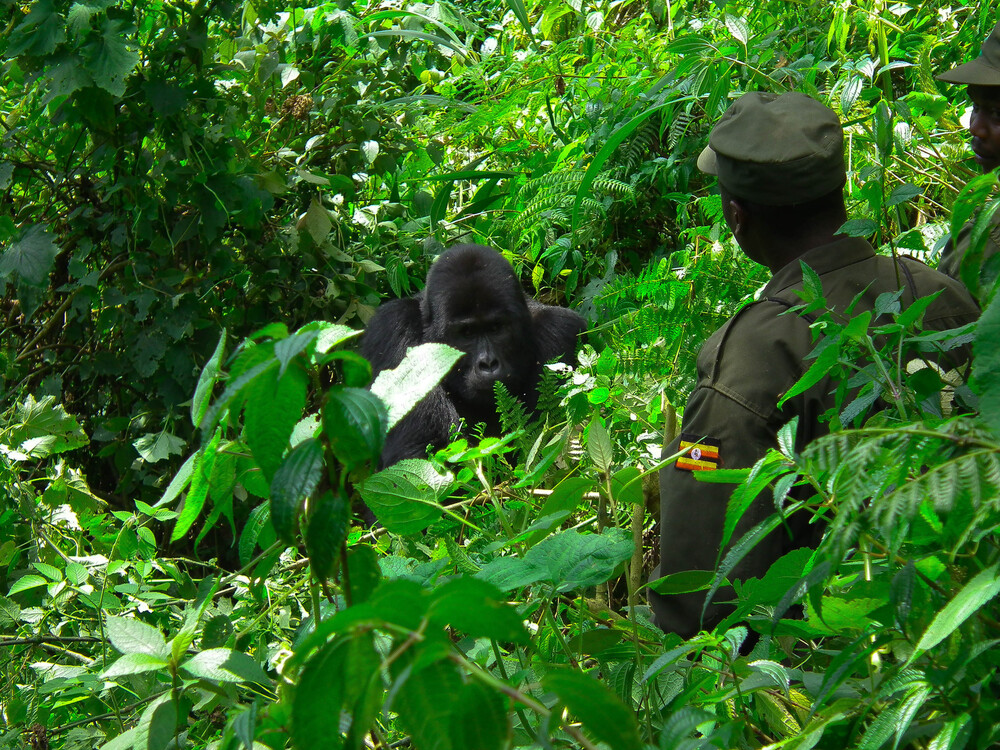
Once briefing is complete, visitors enter the forest with Uganda Wildlife Authority ranger guides and trackers. The first section of the trek may follow an established forest trail, but as the group gets closer to the gorillas, the route can become less predictable. Depending on the family’s location, trekkers may move through thick undergrowth, cross streams, climb slopes or follow recently opened paths through the vegetation.
The search for gorillas is itself an important part of the adventure. Rangers interpret signs left behind by the animals, including recently disturbed plants, feeding remains, nesting sites and other evidence of movement. Trackers may already be deeper inside the forest and communicate information that helps guide the trekking group toward the family.
There is no guaranteed length for a Bwindi Gorilla Trekking expedition. Some groups may locate their gorillas relatively early, while others can spend several hours walking before making contact. Mountain gorillas move freely according to food availability, social interactions, weather and where they spent the previous night.
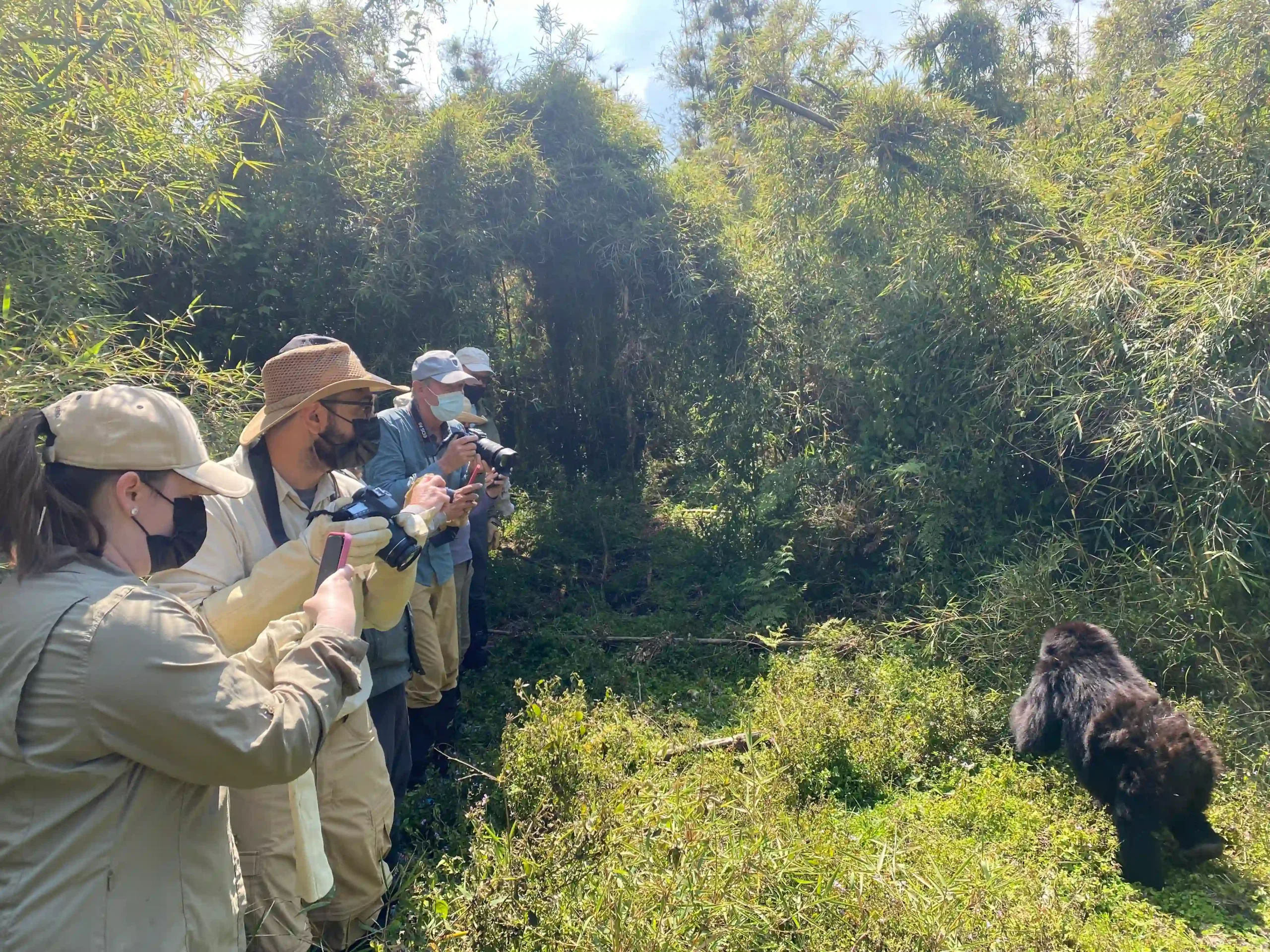
As the group approaches the gorillas, the atmosphere often changes dramatically. Rangers may ask visitors to lower their voices and prepare cameras before leaving unnecessary equipment with porters at a safe point. The sounds of breaking vegetation or low gorilla vocalizations may provide the first indication that the family is nearby.
The eventual encounter can include a remarkable variety of behavior. A silverback may remain resting while monitoring the family, females may feed quietly among vegetation and juveniles can climb branches, wrestle or move curiously through the undergrowth. Mothers may be seen carrying or nursing infants, while other adults travel between feeding areas.
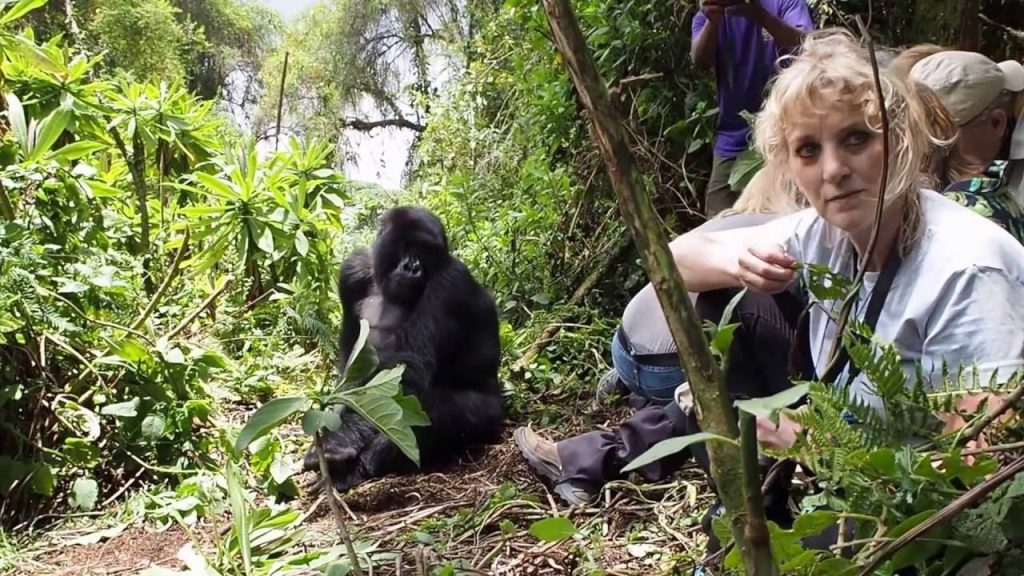
Standard Bwindi Gorilla Trekking allows visitors a regulated observation period once the family has been located. During this time, guests must follow ranger instructions and avoid actions that could disturb the gorillas. The objective is to observe rather than interact with the animals.
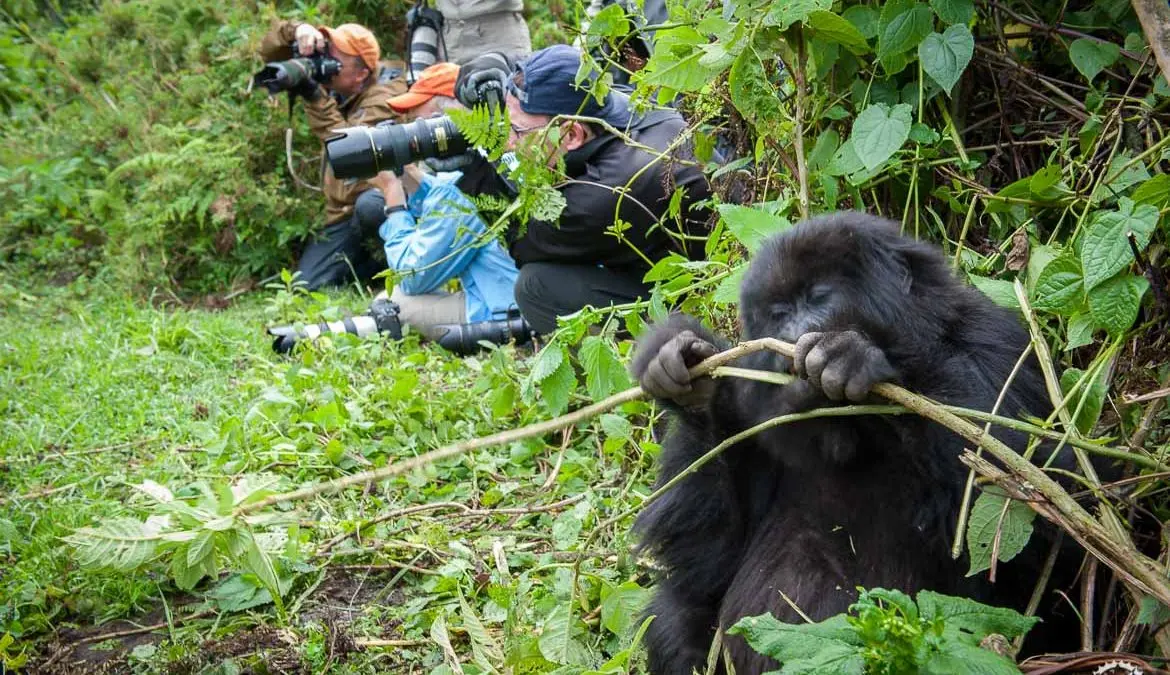
Photography is permitted, but travelers should not allow the desire for a perfect image to overwhelm the experience. Watching the animals without constantly looking through a camera can often produce the strongest memories. The best encounters are usually those where visitors remain quiet and allow the gorilla family’s natural behavior to unfold.
After the viewing period, the group begins the return trek. Depending on where the gorillas were located, the return journey may be relatively quick or involve another substantial walk. Once guests reach the trailhead, they can return to their lodge for lunch, relaxation and time to reflect on what is often the most memorable day of their Uganda safari.
Bwindi Gorilla Trekking Permit Cost in 2026 and 2027
A valid Uganda Wildlife Authority gorilla permit is required for every traveler participating in Bwindi Gorilla Trekking. The permit authorizes the visitor to join a regulated trek on a specific date and within a designated trekking sector. Because permits are limited and tied closely to sector planning, they should normally be confirmed before finalizing accommodation and other non-refundable safari arrangements.
The cost of a permit is an important part of the overall Bwindi safari budget, but travelers should understand that a gorilla permit is different from the total cost of a gorilla safari. The permit covers the regulated trekking experience, while the complete safari price may also include accommodation, private transportation, meals, guide services, border arrangements, domestic flights and other activities.
For designated low-season months such as April, May and November, special permit arrangements may provide attractive value for flexible travelers. These months generally experience more rainfall, but gorilla trekking continues throughout the year because the animals remain within the forest rather than migrating seasonally.
Travelers considering discounted periods should therefore compare more than price alone. Wetter conditions can result in muddier trails, but the forest becomes intensely green and visitor numbers may be lower. For photographers and travelers comfortable with unpredictable weather, this can create a very rewarding Bwindi Gorilla Trekking experience.
From 1 January 2027, the published standard Uganda gorilla permit rates include US$800 for foreign non-residents, US$700 for foreign residents, US$500 for eligible Rest of Africa visitors and UGX 300,000 for East African citizens. The applicable category must be supported by the documentation required by Uganda Wildlife Authority.
The Gorilla Habituation Experience has a different pricing structure because it provides a longer and more specialized encounter. From January 2027, the published foreign non-resident rate is US$1,800, while separate rates apply to foreign residents, Rest of Africa visitors and East African citizens.
The distinction between standard Bwindi Gorilla Trekking and gorilla habituation is therefore significant when preparing a budget. A traveler interested primarily in seeing mountain gorillas may find the standard permit entirely sufficient, while a photographer or dedicated primate enthusiast may consider the additional investment in habituation worthwhile.
Permit booking procedures have also become increasingly important. Suitable permits should ideally be secured as soon as travel dates are confirmed, especially during popular periods. Waiting until accommodation has already been booked can create problems if permits are available only in a different Bwindi sector.
At Boots in the Jungle Safaris, we therefore check permit availability before confirming the final lodge. Once the sector and permit are established, accommodation and transport can be matched to that location.
This sequence protects travelers from one of the most common planning mistakes: purchasing accommodation in one part of Bwindi and later discovering that available gorilla permits are for a completely different sector.
Because permit rates, booking procedures and eligibility requirements may change, travelers should always confirm current information at the time of booking. Boots in the Jungle Safaris checks current availability and applicable permit rates when preparing each safari quotation.
Bwindi Gorilla Trekking vs Gorilla Habituation Experience
Although Bwindi Gorilla Trekking and the Gorilla Habituation Experience both involve mountain gorillas, the two activities are designed for different types of travelers and should not be treated as interchangeable.
Standard Bwindi Gorilla Trekking is the classic experience chosen by most visitors. Guests join a ranger-led group, enter the rainforest and search for a fully habituated gorilla family. Once the family is found, visitors enjoy the regulated observation period before beginning the trek back through the forest.
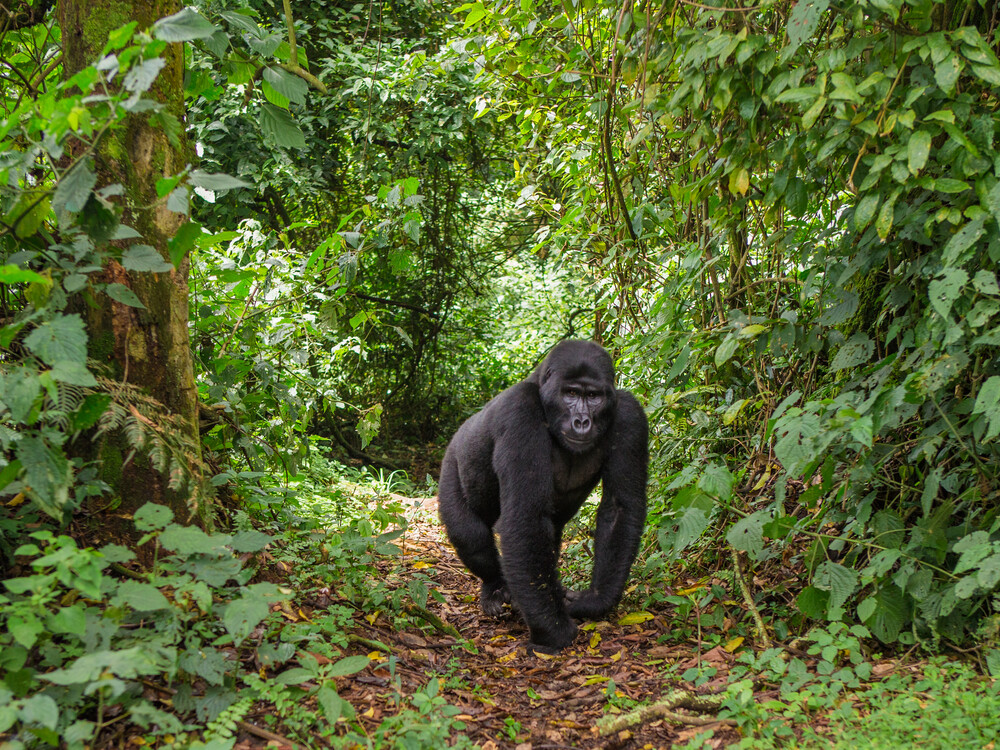
The Gorilla Habituation Experience, by contrast, provides a deeper look into the process through which selected gorilla families gradually become accustomed to controlled human presence. Participants may spend time alongside researchers, trackers and habituation teams rather than simply joining the conventional visitor trekking format.
This makes habituation particularly appealing to wildlife photographers, primate enthusiasts, researchers at heart and travelers returning for a second gorilla experience. More time around the gorillas can create additional opportunities to observe behavior and understand how long-term gorilla conservation and monitoring work.
The additional access comes at a significantly higher cost. From January 2027, the foreign non-resident habituation permit is listed at US$1,800, compared with US$800 for standard gorilla trekking. This substantial difference means travelers should decide according to personal interest rather than assuming that the more expensive experience is automatically better.
For first-time travelers to Uganda, standard Bwindi Gorilla Trekking usually provides the complete emotional experience they are seeking: entering the rainforest, following trackers, locating a wild mountain gorilla family and observing the animals at close range under ranger supervision.
Travelers with a stronger specialist interest may prefer habituation. Photographers, for example, often value additional time because rainforest photography can be difficult. Dense vegetation, movement and changing light mean that a longer experience can provide more opportunities to observe and photograph different behaviors.
A particularly rewarding option for travelers with enough time and budget is to schedule both experiences on separate days. Standard trekking on one day can be followed by habituation on another, creating a more comprehensive mountain gorilla safari.
This approach also prevents the journey from feeling rushed. Guests can spend several nights around southern Bwindi, allowing time for rest between physically demanding forest activities.
For Boots in the Jungle Safaris, the question is therefore not simply “Which experience is better?” The better question is which experience best suits the traveler’s interests, budget, physical preparation and available time.
Best Time for Bwindi Gorilla Trekking
Bwindi Gorilla Trekking is available throughout the year, making it possible to plan a gorilla safari during virtually any month. Mountain gorillas remain within Bwindi throughout the seasons, so travelers do not need to time their safari around animal migration patterns.
The main seasonal differences involve rainfall, trail conditions, visitor demand, accommodation availability and overall travel comfort. Bwindi is a tropical rainforest, which means rain can occur even during periods generally considered drier.
The months around June through September are popular because they normally fall within one of Uganda’s relatively drier travel periods. Trails can be somewhat easier to navigate when there has been less rainfall, although the steep forest environment means muddy sections can still occur.
December through February can also be attractive for travelers looking for relatively favorable trekking conditions. These months combine well with broader Uganda safaris and are particularly popular with international visitors escaping winter in Europe and North America.
Popularity creates another consideration: permit demand. Travelers planning Bwindi Gorilla Trekking during traditionally busy periods should reserve early, particularly if they require a specific sector or accommodation property.
Wetter periods such as March through May and around October and November should not automatically be dismissed. Rain transforms Bwindi into an exceptionally lush landscape, vegetation appears intensely green and mist around the forested hills can create beautiful photographic conditions.
The trade-off is that trails may become considerably muddier and more slippery. Travelers choosing wetter months should therefore be prepared with good waterproof footwear, rain jackets, gloves and a positive attitude toward changing weather.
April, May and November can also provide particular value where official low-season gorilla permit incentives apply. For flexible travelers, the difference in permit price can make these months attractive despite the increased likelihood of rainfall.
Photographers may actually prefer parts of the wetter season because vegetation is lush and atmospheric forest conditions can produce dramatic images. However, low light beneath the forest canopy can make camera settings more demanding, so appropriate photographic equipment is helpful.
Ultimately, there is no single “perfect” month for Bwindi Gorilla Trekking. Travelers prioritizing relatively easier trail conditions may prefer drier periods, while visitors focused on value, quieter travel and lush scenery may enjoy wetter months.
The best time therefore depends on the individual traveler rather than only the calendar.
What to Wear for Bwindi Gorilla Trekking
Choosing appropriate clothing for Bwindi Gorilla Trekking can make a significant difference to comfort inside the rainforest. Travelers do not require technical expedition equipment, but clothing should protect against vegetation, insects, mud and unpredictable weather.
Long trousers are strongly recommended because trails may pass through dense vegetation. Lightweight trekking trousers that dry relatively quickly are more practical than heavy denim, which can become uncomfortable when wet.
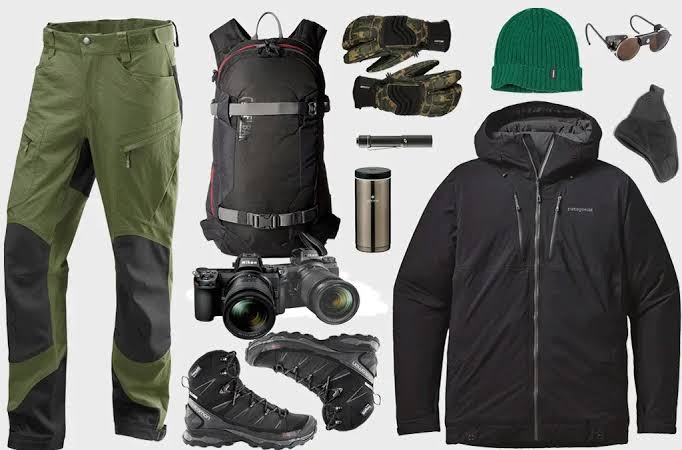
A long-sleeved shirt provides similar protection for the arms. Breathable fabrics are useful because the combination of walking, altitude and humidity can make trekkers warm even when temperatures around the forest feel cool.
The most important clothing item is usually good waterproof hiking footwear. Boots should provide ankle support and reliable traction while already being broken in before the safari. Wearing completely new hiking boots for the first time on trekking morning can cause unnecessary discomfort and blisters.
Rain protection is essential because weather can change quickly in Bwindi. A lightweight waterproof jacket should be packed where it can be reached immediately rather than buried at the bottom of a bag.
Gaiters can help keep mud, water and small insects away from the lower legs and inside of boots. They are especially useful during wetter periods but can also be valuable throughout the year.
Many travelers also find lightweight gardening or trekking gloves helpful. When crossing steep or slippery terrain, visitors may instinctively hold vegetation for support, and gloves can protect the hands from rough plants, thorns and dirt.
A small backpack should contain drinking water, packed lunch, camera equipment, spare batteries, rain protection and essential personal items. Avoid carrying unnecessary weight simply because there is room in the bag.
A hat can provide protection around exposed areas near the forest edge, while sunscreen and insect repellent are useful additions. Inside the dense forest, the emphasis shifts more toward rain and vegetation protection.
Camera equipment should also be chosen realistically. Large professional equipment can produce excellent results, but carrying several heavy lenses throughout a demanding trek may become uncomfortable. Using a porter makes photography-focused Bwindi Gorilla Trekking considerably easier.
The best clothing strategy is therefore simple: comfortable layers, long sleeves, long trousers, waterproof footwear, rain protection and as little unnecessary weight as possible. Proper preparation allows travelers to focus their attention on the rainforest and mountain gorillas rather than worrying about wet clothing, uncomfortable shoes or heavy equipment.
Combining Bwindi Gorilla Trekking With Queen Elizabeth National Park
Combining Bwindi Gorilla Trekking with Queen Elizabeth National Park creates one of the most complete wildlife experiences available in Uganda. Bwindi introduces travelers to the dense montane rainforest and the intimate experience of searching for mountain gorillas on foot, while Queen Elizabeth National Park brings an entirely different landscape of open savannah, crater areas, wetlands, channels and traditional game-viewing environments. Putting the two destinations together allows visitors to experience both Uganda’s famous primates and its classic African wildlife without needing to cross into another country.
For many first-time visitors to Uganda, this combination makes particularly good sense because gorilla trekking alone reveals only one part of the country’s natural diversity. After spending a morning walking through Bwindi’s rainforest, travelers can continue toward Queen Elizabeth National Park for game drives in search of elephants, buffaloes, antelopes and other savannah wildlife. The contrast between the thick forest of Bwindi and the open landscapes of Queen Elizabeth makes the journey feel varied rather than repetitive, and each destination strengthens the overall safari experience.
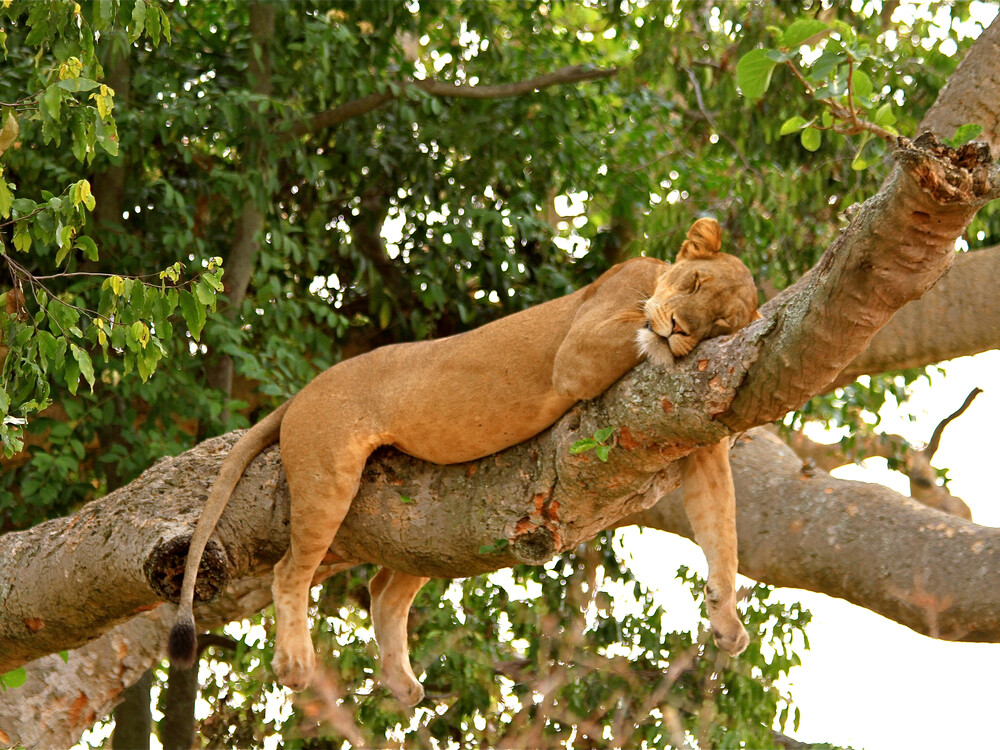
A particularly attractive routing can involve the Ishasha sector of Queen Elizabeth National Park, depending on the selected Bwindi trekking sector and wider itinerary. Ishasha is well known as part of the southern side of Queen Elizabeth National Park and can provide a natural transition between the two protected areas. For travelers staying in northern Bwindi, especially around Buhoma, this route can be particularly practical because it helps reduce unnecessary backtracking and allows the safari to flow logically from one destination to another.
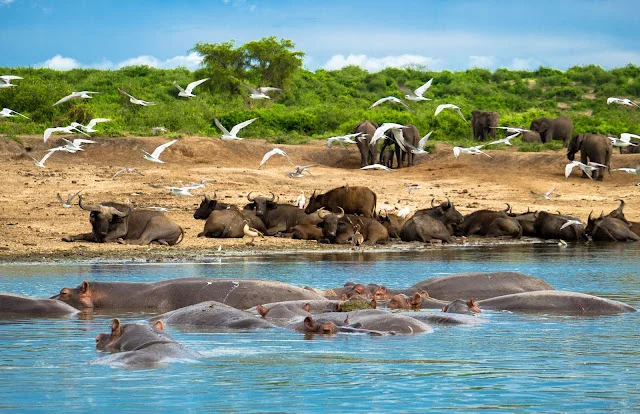
The Kazinga Channel also adds another dimension to the journey. After the physical intensity of Bwindi Gorilla Trekking, a boat safari offers a slower and more relaxed way to observe wildlife. Travelers can spend time watching hippos, water birds and animals coming toward the shoreline while enjoying a different perspective from the game drives. This balance between active trekking and relaxed wildlife viewing makes the combined itinerary especially appealing to couples, families and older travelers who want a varied pace.
A five-day itinerary can provide a comfortable introduction to both destinations, while six or seven days allow more time for game drives, the boat cruise, additional wildlife viewing and a more relaxed stay around Bwindi. Travelers with more time can continue north toward Kibale National Park for chimpanzee trekking, creating a larger western Uganda circuit built around gorillas, chimpanzees and savannah wildlife.
For Boots in the Jungle Safaris, the key to combining Queen Elizabeth with Bwindi Gorilla Trekking is route planning. The selected gorilla trekking sector should influence where guests stay and how they approach or leave Bwindi. A safari beginning in Queen Elizabeth may naturally favor one Bwindi sector, while an itinerary continuing toward Lake Bunyonyi or Kigali may work better through another. When properly organized, the combination feels seamless and avoids unnecessary long-distance transfers.
Combining Bwindi Gorilla Trekking With Kibale Chimpanzee Trekking
Combining Bwindi Gorilla Trekking with chimpanzee trekking in Kibale National Park creates one of Uganda’s strongest primate-focused safari experiences. Although both activities involve tracking primates inside forest environments, the encounters are very different in atmosphere, animal behavior and style of movement. Mountain gorillas are generally observed at ground level within the dense forest environment of Bwindi, while chimpanzees are far more active and may move quickly through vegetation or between trees.
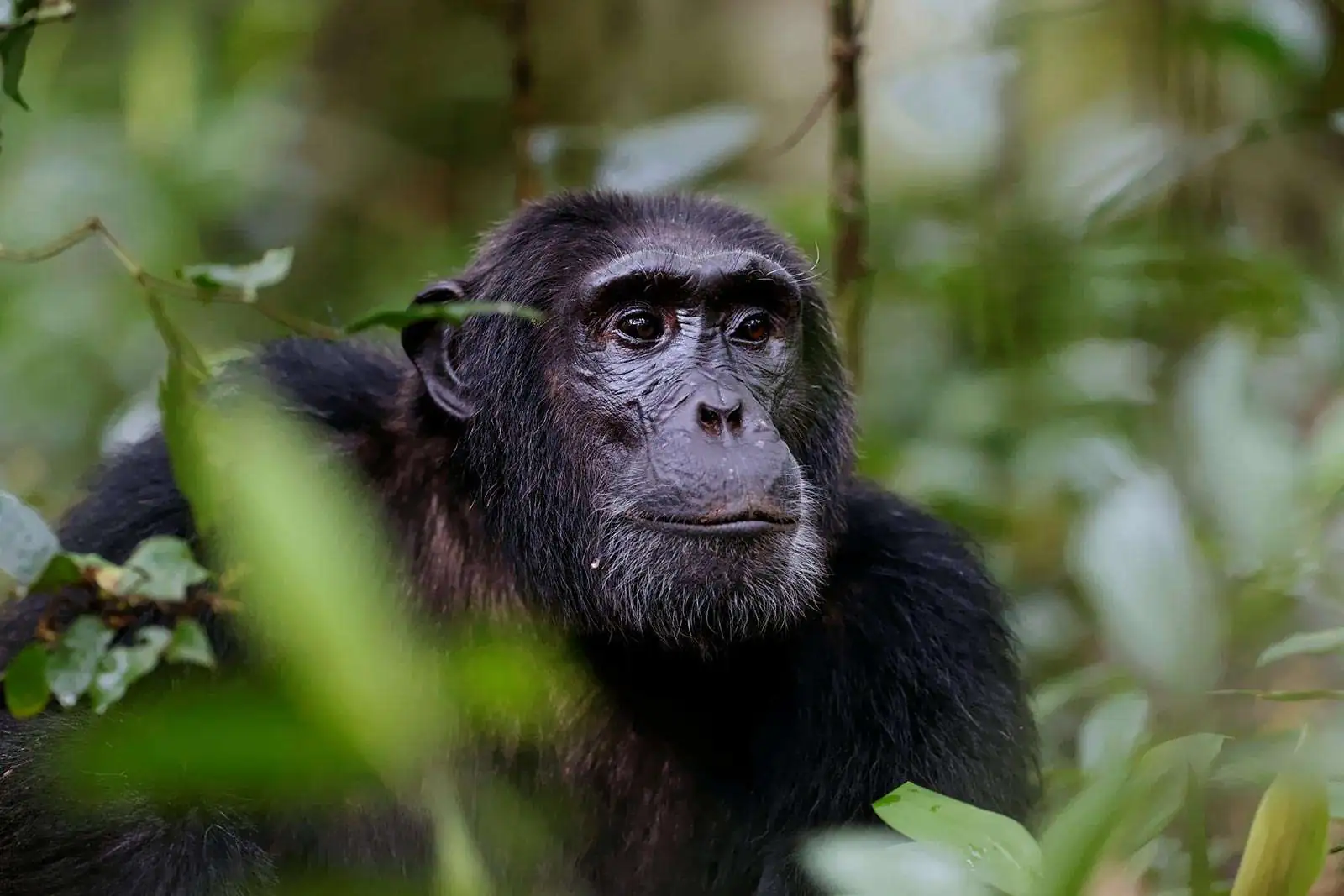
This contrast makes the two experiences complementary rather than repetitive. A traveler who has already completed Bwindi Gorilla Trekking will still find the chimpanzee experience very different. Gorillas often provide slower, more intimate moments in which visitors observe family interactions, feeding, resting and the presence of powerful silverbacks. Chimpanzees, by comparison, can be energetic, vocal and highly mobile, creating a faster-paced tracking experience.
Kibale also fits naturally into a longer western Uganda itinerary. A carefully designed safari can begin in Entebbe, continue toward Kibale for chimpanzee trekking, move through Queen Elizabeth National Park for game viewing and then finish with Bwindi Gorilla Trekking. This route allows travelers to experience Uganda’s primates and traditional wildlife in one connected journey rather than making repeated returns to central Uganda.
For wildlife photographers, the combination is particularly rewarding because each destination presents different photographic challenges. Bwindi’s dense vegetation, low forest light and close gorilla encounters require patience and careful camera settings, while chimpanzee trekking can involve faster movement and more unpredictable positioning. Travelers interested in wildlife behavior therefore gain a broader photographic experience by including both activities.
The combination is equally appealing to travelers who want to understand Uganda’s conservation story more deeply. Mountain gorillas and chimpanzees represent two of the country’s most internationally recognized primate experiences, and visiting both destinations highlights the importance of forest conservation in western Uganda. Rather than seeing a safari only through the perspective of game drives, visitors spend meaningful time walking through protected forest ecosystems.
Travelers should allow enough time between the two activities. Both can be physically demanding, and a tightly packed itinerary can turn what should be memorable experiences into rushed obligations. Including Queen Elizabeth National Park between Kibale and Bwindi can create a natural break, giving visitors time to enjoy game drives and a boat safari before returning to another forest trekking experience.
For Boots in the Jungle Safaris, an itinerary combining Kibale with Bwindi Gorilla Trekking works particularly well for primate enthusiasts, photographers, couples and first-time visitors who want a more complete understanding of Uganda’s wildlife diversity.
Conservation and Communities Around Bwindi
The continued success of Bwindi Gorilla Trekking is closely connected to decades of mountain gorilla conservation, scientific research, tourism management and cooperation with communities living around Bwindi Impenetrable National Park. The gorilla experience that visitors enjoy today depends on a much larger conservation system involving protected habitat, ranger teams, researchers, tourism businesses and local people whose daily lives are closely connected to the forest.
Bwindi is internationally recognized for its biodiversity and for the importance of its mountain gorilla population. The protection of these animals requires much more than simply preventing direct harm to individual gorillas. Their rainforest habitat must remain intact, human pressure around the forest boundary must be carefully managed and tourism must operate in a way that minimizes disturbance while still generating economic value from conservation.
This is why Bwindi Gorilla Trekking is carefully regulated. Visitor numbers are controlled, trekking groups are managed by Uganda Wildlife Authority and interactions with gorilla families follow established rules. These restrictions may sometimes appear strict to visitors, but they help ensure that tourism remains compatible with the long-term protection of the animals.
The communities surrounding Bwindi are also central to this conservation story. According to the material already included in your draft, Uganda Wildlife Authority reported in June 2025 that more than UGX 2.19 billion in revenue-sharing funds had been distributed to communities within the Bwindi–Mgahinga Conservation Area. The principle behind this system is important: communities living next to protected wildlife should receive meaningful benefits from tourism and conservation.
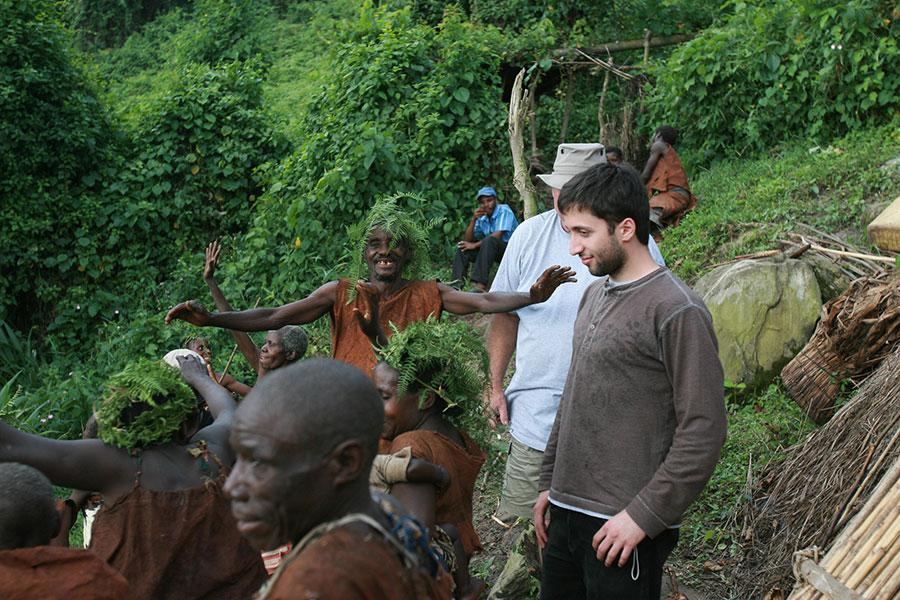
Employment is another major connection between tourism and surrounding communities. Porters, local guides, lodge employees, drivers, craftspeople and suppliers can all benefit from visitors traveling for Bwindi Gorilla Trekking. Hiring a porter, for example, may seem like a small decision from the visitor’s perspective, but it provides direct income while also making the trek more comfortable.
Community visits can provide another source of tourism revenue when they are organized responsibly. Travelers may have opportunities to learn about local life, crafts, agriculture and cultural traditions while spending money directly in communities surrounding the forest. These experiences should be treated with respect and should never reduce local people to attractions staged purely for photography.
Travelers can contribute by making simple but meaningful choices. Hiring local porters, purchasing genuine locally produced crafts, respecting community photography etiquette and choosing responsible tourism services all help spread the economic benefits of the safari beyond the park gates.
For Boots in the Jungle Safaris, conservation should therefore be presented as part of the Bwindi Gorilla Trekking experience rather than as a small section added at the end of an itinerary. Visitors are not only paying to see mountain gorillas; they are participating in a tourism system whose long-term success depends on protecting the forest and maintaining local support for conservation.
A Sample 3-Day Bwindi Gorilla Trekking Safari
A three-day Bwindi Gorilla Trekking safari is one of the most practical short itineraries for travelers whose main priority is seeing mountain gorillas while still allowing enough time for comfortable transfers and an overnight stay close to the correct trekking sector. The itinerary can be adapted depending on whether the journey begins in Entebbe, Kampala or Kigali.
Day 1: Travel to Bwindi Impenetrable National Park
Your private safari begins with a pickup by your Boots in the Jungle Safaris driver-guide and a transfer toward Bwindi Impenetrable National Park. The precise routing depends on the starting point and the trekking sector confirmed on your gorilla permit. Travelers beginning from Entebbe or Kampala will generally experience a longer overland journey through Uganda, while those beginning in Kigali may have a shorter approach toward the southern Bwindi region.
As the journey enters southwestern Uganda, the scenery changes noticeably. Flat and rolling countryside gradually gives way to increasingly dramatic hills, cultivated slopes and forested mountain landscapes. This transition helps build anticipation because the environment becomes increasingly different from Uganda’s savannah regions.
Rest stops and meals can be incorporated according to the route, and private transportation allows flexibility that is difficult to achieve with rigid group schedules. Travelers can stop for photography, refreshments or short breaks while continuing toward Bwindi.
On arrival, check into a lodge selected specifically for the confirmed trekking sector. This detail is extremely important for a successful Bwindi Gorilla Trekking itinerary because Buhoma, Ruhija, Rushaga and Nkuringo are not interchangeable briefing points.
The evening is intentionally relaxed. Guests can enjoy dinner, prepare their daypack and receive a briefing from the Boots in the Jungle Safaris guide about the following morning. Waterproof boots, long trousers, rain protection, camera equipment and drinking water should be prepared before going to bed so that trekking morning begins without unnecessary stress.
Day 2: Bwindi Gorilla Trekking Experience
The second day is the centerpiece of the safari. Guests wake early, have breakfast and transfer to the designated Uganda Wildlife Authority briefing point. After registration, rangers explain the rules of Bwindi Gorilla Trekking, expected forest conditions and appropriate behavior around mountain gorillas.
Visitors are then organized into trekking groups and allocated to a habituated gorilla family within the sector. This is also an excellent time to arrange a porter. Even fit travelers often appreciate having someone carry drinking water, lunch, camera equipment and rain gear during a long forest walk.
The trek begins under the leadership of trained rangers and trackers. The length of the search cannot be guaranteed because the mountain gorillas are free-ranging animals. Some groups may locate their family relatively quickly, while others may spend several hours walking through steep terrain and dense vegetation.
As trackers move closer to the gorillas, the atmosphere changes. Visitors may see signs of recent feeding, disturbed vegetation or other evidence that the family is nearby. Eventually the group reaches the gorillas and enters the regulated observation period.
This is the moment most travelers have imagined for months or even years. A silverback may rest quietly among the vegetation while females feed nearby and juveniles play between branches. The encounter is not staged, meaning every Bwindi Gorilla Trekking experience is unique.
After the regulated viewing period, the group begins its walk back through the forest. Guests then return to their lodge, often tired but deeply satisfied. The remainder of the afternoon should usually remain relaxed rather than being filled with another demanding activity.
Depending on energy levels, visitors may simply rest at the lodge, review photographs or join an optional community experience later in the day.
Day 3: Departure or Continue Your Uganda Safari
After breakfast, depart Bwindi and continue according to the wider safari plan. Travelers on a short itinerary may begin the return journey toward Kigali, Entebbe or Kampala, while guests with additional days can continue deeper into Uganda.
One of the strongest extensions is Queen Elizabeth National Park, where visitors can exchange the rainforest for savannah wildlife, game drives and the Kazinga Channel. Others may continue toward Lake Bunyonyi for relaxation after their Bwindi Gorilla Trekking adventure.
Longer safari itineraries can proceed toward Kibale National Park for chimpanzee trekking or incorporate Lake Mburo before returning to Entebbe. Travelers using Kigali as their gateway can instead continue across the border into Rwanda.
The flexibility of this final day demonstrates why a three-day itinerary works well as a foundation rather than a rigid product. Boots in the Jungle Safaris can modify the route according to flight schedules, lodge preference, trekking sector and additional destinations.
Frequently Asked Questions About Bwindi Gorilla Trekking
Is Bwindi Gorilla Trekking worth it?
Yes. For travelers interested in wildlife, primates and conservation, Bwindi Gorilla Trekking can be one of the most memorable experiences on an African safari. The experience involves much more than simply seeing a mountain gorilla. Visitors enter one of Uganda’s most important rainforest environments, follow experienced trackers and eventually spend controlled time observing a habituated gorilla family living naturally within the forest.
The physical effort involved in reaching the gorillas often makes the encounter feel even more rewarding. Unlike wildlife seen from a vehicle, gorilla trekking requires active participation and patience. Combined with Bwindi’s scenery, biodiversity and conservation importance, the experience offers considerable value for travelers seeking something beyond a conventional safari.
How much is Bwindi Gorilla Trekking?
The cost of Bwindi Gorilla Trekking should be separated into the gorilla permit price and the total safari cost. The permit provides access to the regulated trekking experience, while a complete safari may additionally include accommodation, private transportation, meals, guide services and other activities.
According to the tariff information contained in your existing draft, the standard permit from January 2027 is listed at US$800 for foreign non-residents, US$700 for foreign residents, US$500 for Rest of Africa visitors and UGX 300,000 for East African citizens. Special low-season rates have also been introduced for certain months.
Travelers should therefore request a complete quotation rather than assuming the permit price represents the entire safari budget.
What is the minimum age for Bwindi Gorilla Trekking?
The minimum age for Bwindi Gorilla Trekking is 15 years according to the information already contained in your draft. This rule means families traveling with younger children need to plan alternative activities for them while eligible family members complete the trek.
A family safari can still include Bwindi successfully. The key is selecting suitable accommodation and arranging appropriate supervision or activities for younger travelers during the trekking morning.
Which is the best Bwindi Gorilla Trekking sector?
There is no single sector that is best for every traveler. Buhoma, Ruhija, Rushaga and Nkuringo each offer different advantages.
Buhoma may fit particularly well with Queen Elizabeth National Park, while Rushaga and Nkuringo can work naturally with southern Uganda, Kisoro and Kigali-based routes. Ruhija can fit well into itineraries involving Kabale and eastern Bwindi.
The best sector for Bwindi Gorilla Trekking should therefore be chosen according to permit availability, accommodation preference and the overall safari route rather than reputation alone.
Can I choose which gorilla family I trek?
Travelers should focus primarily on securing the correct trekking sector rather than expecting to reserve a specific named gorilla family months in advance.
Gorilla-family allocation is handled operationally by Uganda Wildlife Authority within the relevant sector. Mountain gorillas are wild animals and family structures can change naturally over time.
For most visitors, every habituated family offers the potential for an extraordinary Bwindi Gorilla Trekking experience.
How long does Bwindi Gorilla Trekking take?
There is no guaranteed trekking duration because mountain gorillas move freely through the forest.
Some visitors may locate their allocated family relatively quickly, while others can spend several hours trekking through vegetation and steep terrain before reaching the gorillas.
Travelers should therefore keep the main part of the day free and avoid scheduling another time-sensitive activity immediately after Bwindi Gorilla Trekking.
Is Bwindi Gorilla Trekking difficult?
The difficulty varies considerably according to weather, terrain and the location of the gorillas.
Bwindi contains steep forested hills, muddy trails and dense vegetation, which means some treks can be physically demanding. However, travelers do not need to be elite athletes.
Reasonable fitness, appropriate footwear, a light daypack and porter assistance can make Bwindi Gorilla Trekking considerably more manageable.
Should I hire a porter in Bwindi?
Hiring a porter is strongly recommended.
A porter can carry drinking water, lunch, camera equipment and rain gear while also helping travelers on steep or slippery sections of trail. Even physically fit visitors often appreciate this support during longer treks.
Hiring a porter also provides direct income to people living around Bwindi, making it both a practical and locally beneficial decision.
Can I do Bwindi Gorilla Trekking from Kigali?
Yes. Kigali can provide a practical gateway for Bwindi Gorilla Trekking, particularly for southern Bwindi itineraries.
The exact route depends on the selected trekking sector, border arrangements and final accommodation. Cross-border logistics should therefore be confirmed before the safari.
For travelers with limited time, starting in Kigali can make a short Uganda gorilla itinerary particularly attractive.
Can Bwindi Gorilla Trekking be combined with a wildlife safari?
Yes, and for many travelers this is one of the best ways to experience Uganda.
Queen Elizabeth National Park is an especially natural combination because it introduces classic game drives and boat safaris after the rainforest experience.
Longer itineraries can combine Bwindi Gorilla Trekking with Queen Elizabeth, Kibale chimpanzees, Lake Bunyonyi and other destinations.
Is Bwindi Gorilla Trekking available throughout the year?
Yes. Mountain gorillas remain within Bwindi throughout the year, so trekking is not dependent on a seasonal migration.
The main differences between months concern rainfall, trail conditions, permit demand and general safari comfort.
This means the best month for Bwindi Gorilla Trekking depends largely on the traveler’s priorities rather than the availability of the gorillas.
How early should I book Bwindi Gorilla Trekking?
Travelers with fixed travel dates should generally reserve well in advance, especially when they require a specific trekking sector or preferred lodge.
Permit availability influences accommodation and route planning, so waiting until the final weeks before travel can significantly reduce options.
For this reason, Boots in the Jungle Safaris recommends beginning the Bwindi Gorilla Trekking planning process as soon as travel dates become reasonably certain.
Plan Your Bwindi Gorilla Trekking Safari
A successful Bwindi Gorilla Trekking safari begins long before the morning travelers enter the forest. The permit, trekking sector, accommodation, transportation and wider Uganda itinerary all need to work together. Poor coordination between these elements can create unnecessarily long transfers, inconvenient lodge locations and avoidable stress on the trekking day.
Boots in the Jungle Safaris can design private Bwindi journeys beginning in Entebbe, Kampala or Kigali, depending on the traveler’s wider African itinerary. Short trips can focus almost entirely on the gorilla experience, while longer safaris can connect Bwindi with Queen Elizabeth National Park, Kibale, Lake Bunyonyi, Mgahinga and other destinations across Uganda.
Travelers can choose between budget-conscious, comfortable mid-range, luxury and highly personalized safari arrangements. Accommodation can be matched to the correct trekking sector, while transport is designed around realistic road conditions and the destinations included before and after Bwindi.
For travelers with limited time, domestic flight options can also be considered as part of the itinerary. Those with more days can experience Uganda overland, allowing the journey itself to become part of the safari.
Photographers can include additional nights or multiple gorilla experiences. Honeymooners can combine Bwindi Gorilla Trekking with scenic lodges and Lake Bunyonyi. Senior travelers can receive more carefully paced itineraries, while wildlife enthusiasts can extend toward Queen Elizabeth and Kibale.
The result should be a safari designed around the traveler rather than a traveler being forced to fit into a rigid itinerary.